By Sternhagen Editorial Team
Wall-Mounted vs Deck-Mounted Basin Mixer: Key Differences
Both types of basin mixer combine hot and cold water through one spout. The difference is where they are installed: a wall-mounted basin mixer is fixed to the wall above the basin, with its valve concealed in the wall, while a deck-mounted basin mixer sits on the basin or countertop and connects from below.
| Feature | Wall-Mounted Basin Mixer | Deck-Mounted Basin Mixer |
|---|---|---|
| Installation | Mounted on the wall | Mounted on the basin or countertop |
| Plumbing | Usually requires wall plumbing | Typically connects through the basin or counter |
| Appearance | Clean, minimalist design | Wide range of modern and classic designs |
| Countertop space | Keeps the basin deck or counter clear | Occupies some basin or counter space |
| Cleaning | Easier access around the basin deck | Requires cleaning around the mixer base |
| Maintenance | Concealed connections may be harder to access | Connections are often easier to reach from below |
| Installation cost | Can be higher if wall plumbing needs modification | Often simpler with compatible existing plumbing |
| Best for | Minimalist bathrooms and selected countertop basins | Standard basin and vanity installations |
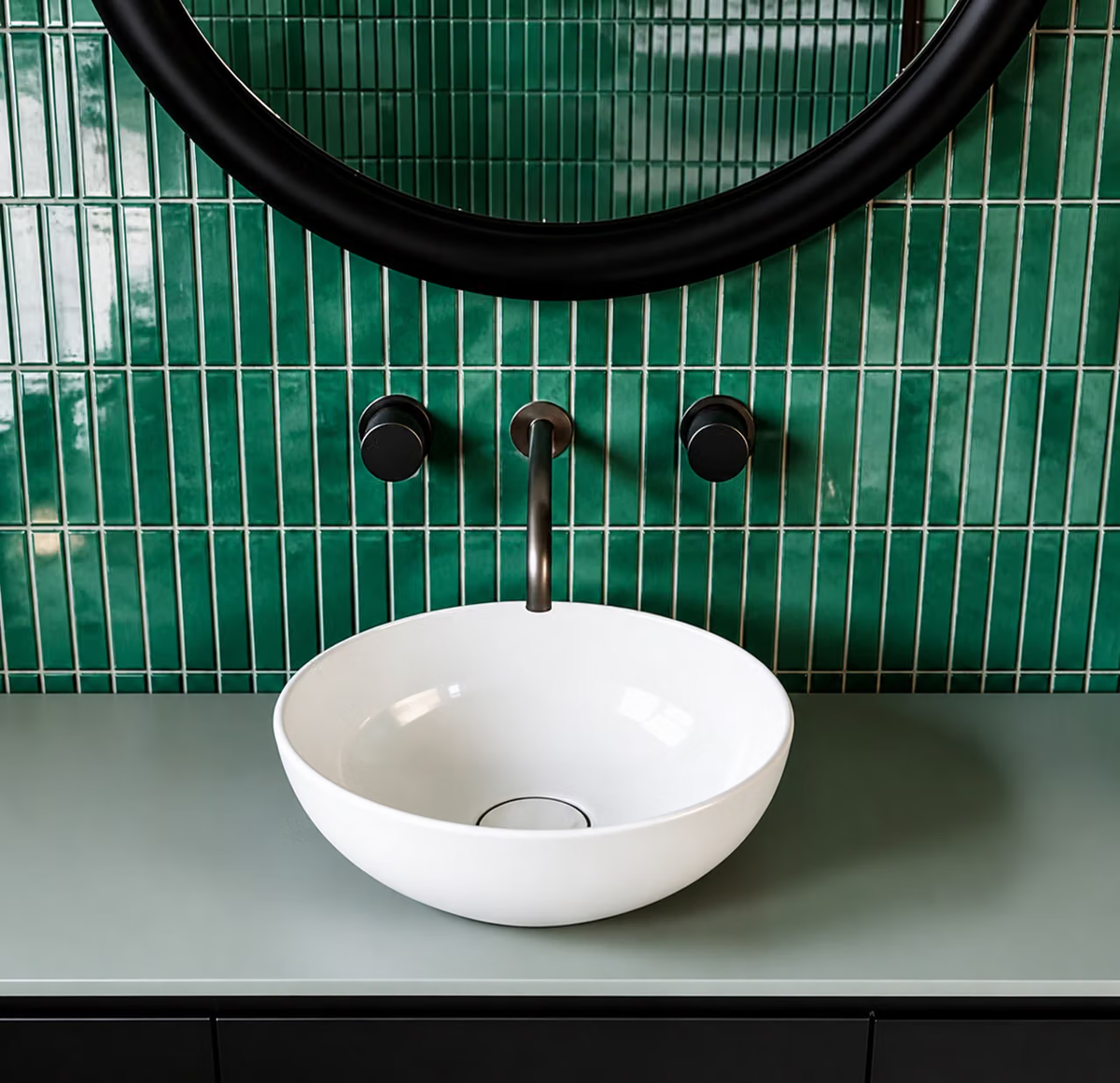
White round countertop basin on a sage green counter with a matte black wall-mounted basin mixer.
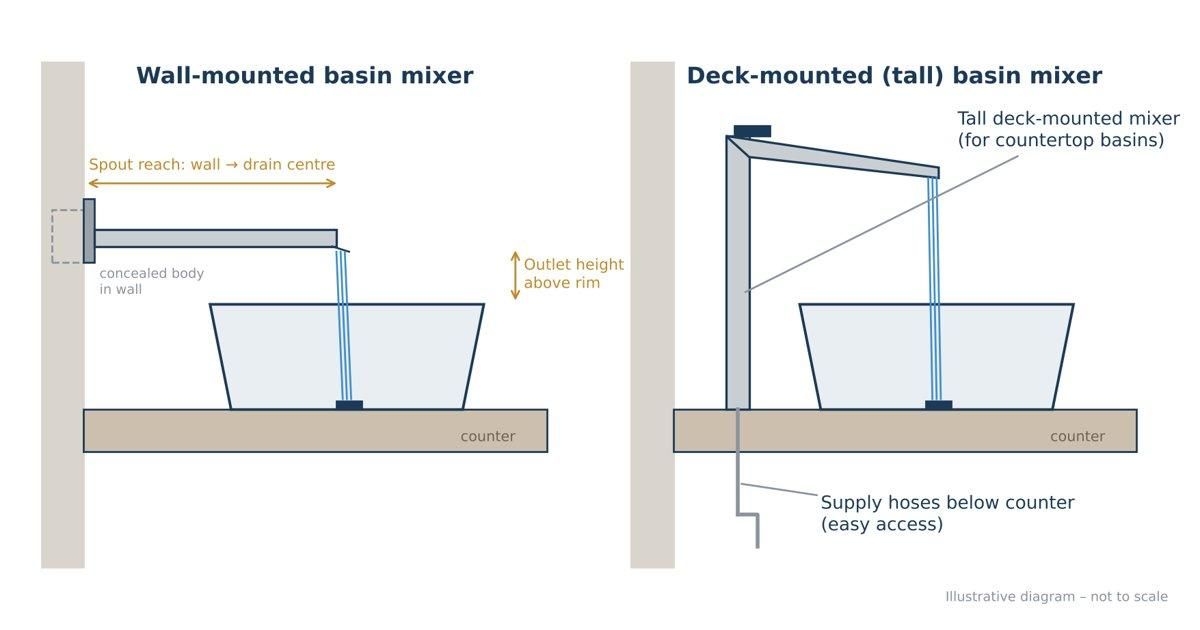
Diagram comparing a wall-mounted basin mixer, showing spout reach and outlet height, with a tall deck-mounted mixer and its supply hoses below the counter.
What Is a Wall-Mounted Basin Mixer?
A wall-mounted basin mixer is installed on the wall above the wash basin, with the spout and controls projecting from the wall. Its plumbing connections are concealed in the wall, usually in an in-wall body fitted before tiling. It is common in contemporary and minimalist bathrooms.
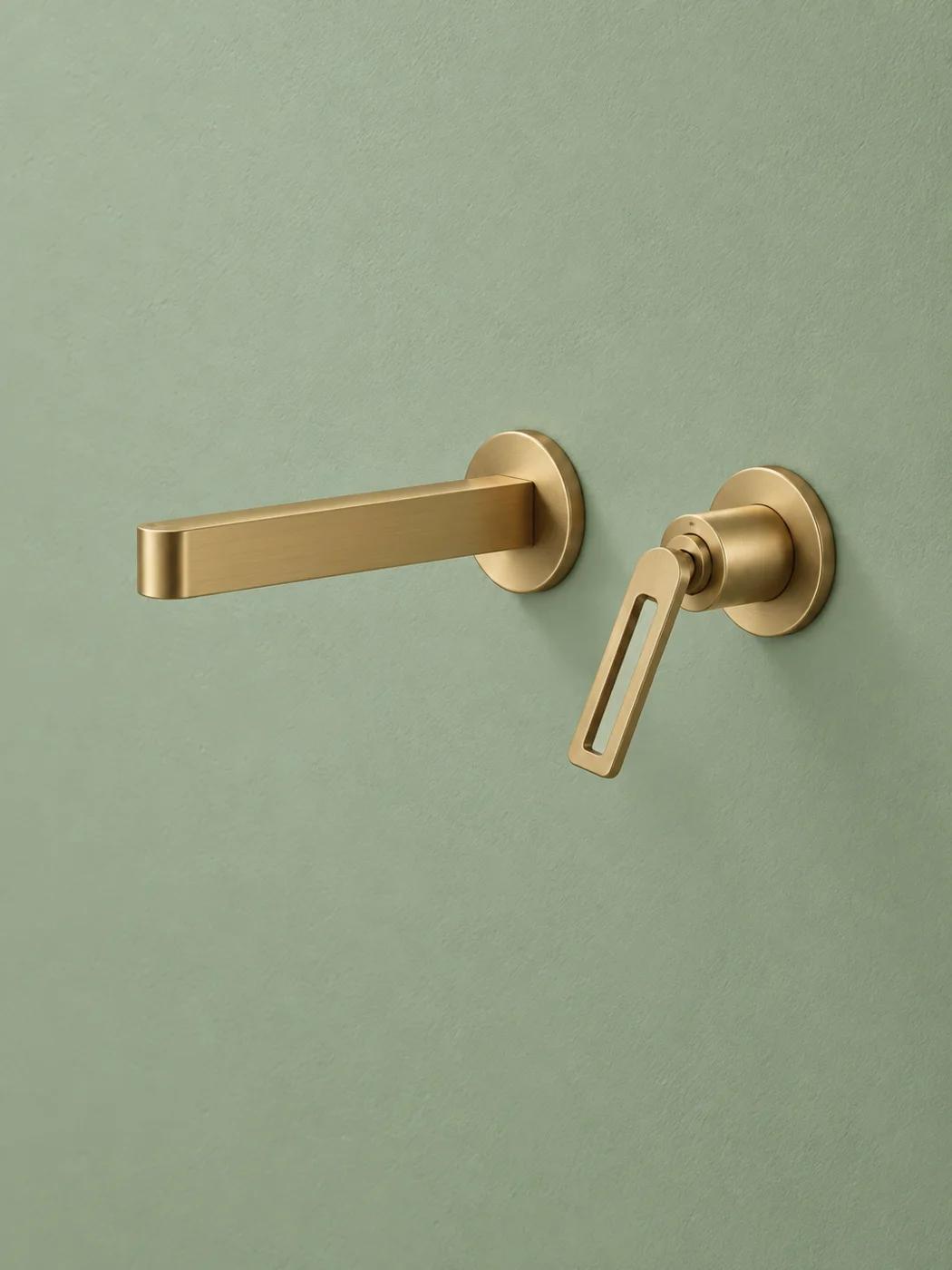
Brushed gold Sternhagen Elbe wall-mounted basin mixer with a separate lever on a sage green wall.
Advantages of Wall-Mounted Basin Mixers
- Keeps the basin deck or countertop clear.
- Creates a clean, streamlined appearance.
- Works well with countertop and vessel basins.
- Allows flexible spout placement when planned during construction.
Disadvantages of Wall-Mounted Basin Mixers
- Requires accurate installation height and positioning.
- May need changes to existing wall plumbing.
- Concealed components need proper service access.
- More involved to install during renovations.
What Is a Deck-Mounted Basin Mixer?
A deck-mounted basin mixer is installed directly on the basin or countertop. It comes in standard-height and tall designs, is the most common type in homes, and needs a compatible tap hole or countertop opening.
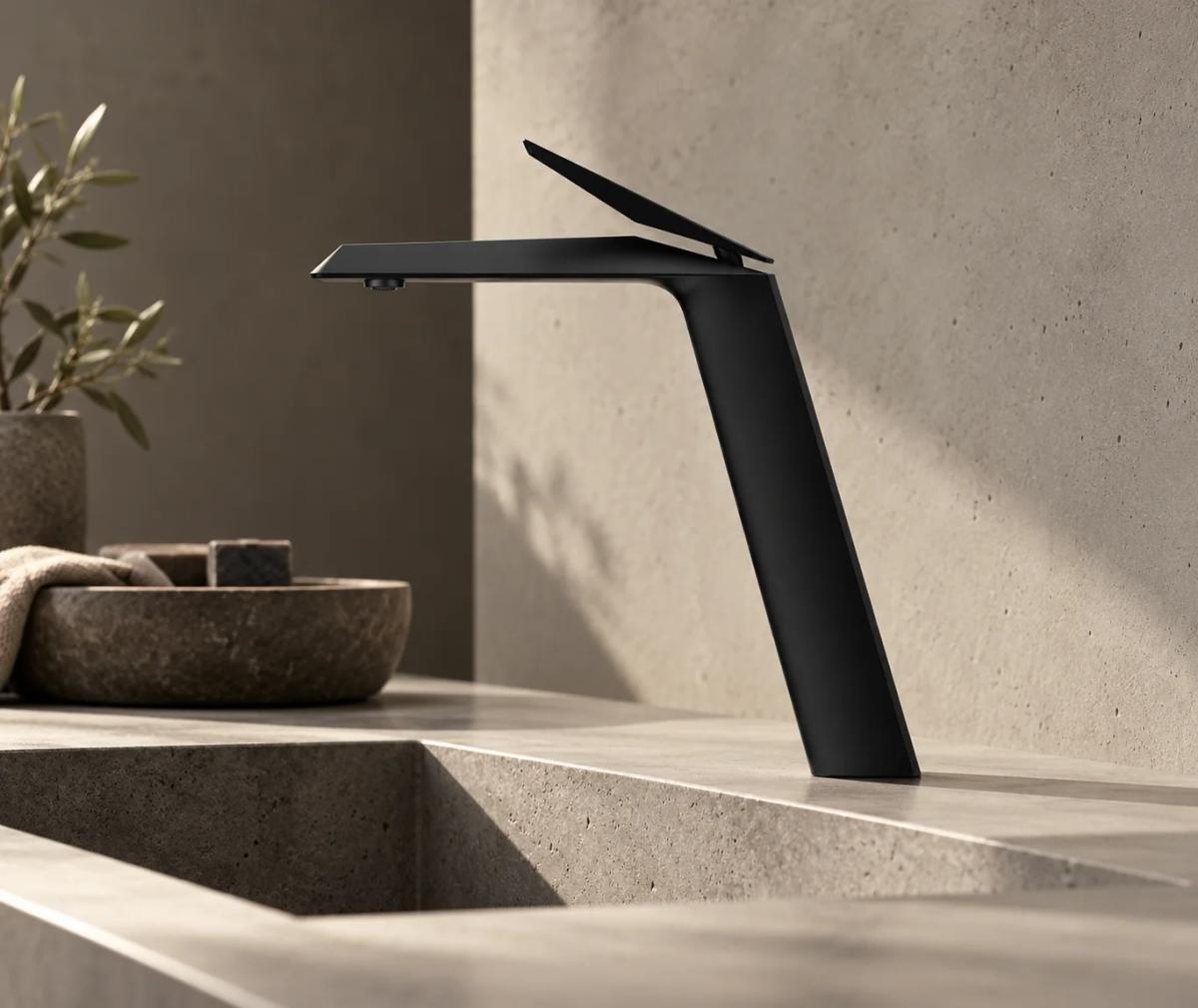
Matte black Sternhagen Rhine tall basin mixer beside a stone vessel basin.
Advantages of Deck-Mounted Basin Mixers
- Often easier to install with compatible existing plumbing.
- Available in many designs, sizes and finishes.
- Connections are usually accessible beneath the basin or counter.
- Suits a wide range of wash basins.
Disadvantages of Deck-Mounted Basin Mixers
- Takes up space on the basin deck or countertop.
- Water and dirt can collect around the base.
- Needs compatible tap holes and mounting space.
- The wrong spout height or reach can cause splashing.
Wall-Mounted vs Deck-Mounted Basin Mixer: Which Is Better?
1. Bathroom Design and Appearance
Wall-mounted mixers suit minimalist designs and keep counters visually clear. Deck-mounted mixers come in classic and modern styles. Either can work in a luxury bathroom when matched with the basin and other fittings.
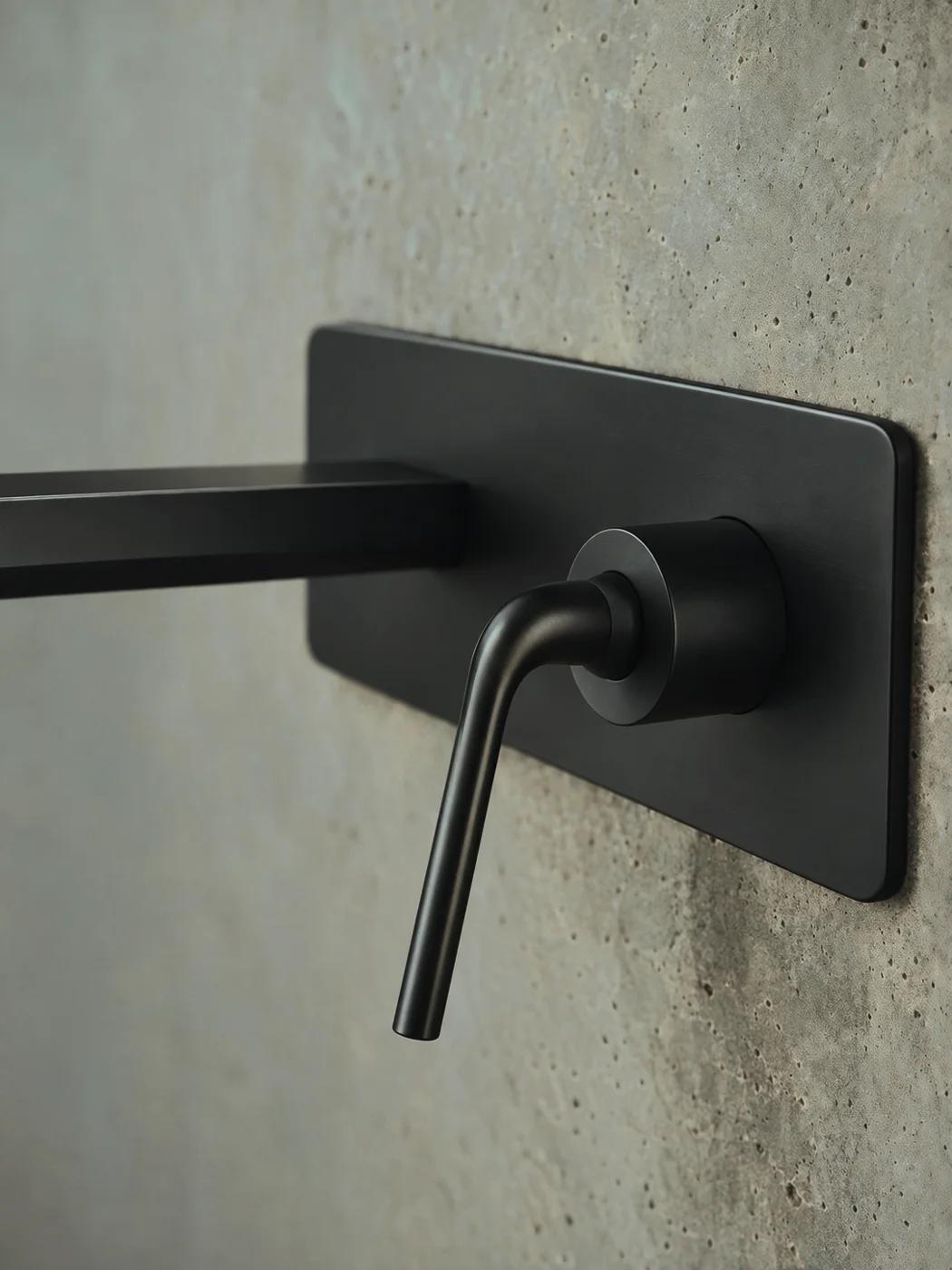
Matte black Sternhagen Danora wall-mounted basin mixer with a slim lever handle.
2. Installation Requirements
A wall-mounted mixer needs suitable wall plumbing, a securely fixed in-wall body at the correct depth, and accurate positioning – easiest to plan during new construction or major renovation, before tiling. A deck-mounted mixer needs compatible tap holes and space beneath the mounting surface. In both cases, check that your water pressure suits the mixer and use a professional plumber.
3. Basin Compatibility
- Countertop basins suit a wall-mounted mixer or a tall deck-mounted mixer.
- Basins with built-in tap holes are designed for deck-mounted mixers.
- Under-counter and inset basins can use either, if the layout allows.
Always check three measurements against the basin: spout reach (water should land near the drain, not at the back edge), spout height (enough clearance above the rim to wash comfortably without a long drop that splashes) and the water landing position. See Countertop vs Wall-Mounted Basin for the basin side of the decision.
4. Cleaning and Maintenance
Wall-mounted mixers leave the countertop clear for cleaning, while deck-mounted mixers need cleaning around their bases. Deck-mounted connections are easier to reach from below; wall-mounted models should allow front access to serviceable parts such as the cartridge.
5. Cost and Long-Term Practicality
Compare the product, in-wall body, labour, plumbing changes and future maintenance. Wall-mounted installations can cost more when walls and plumbing need modifying, while deck-mounted mixers may be more economical with compatible existing plumbing. Neither style is automatically more durable – build quality, the cartridge and correct installation matter far more.
Final Verdict: Wall-Mounted or Deck-Mounted Basin Mixer?
Choose a wall-mounted basin mixer if:
- You prefer a clean, minimalist look.
- You want to keep the countertop clear.
- You are planning a new bathroom or major renovation.
- Your basin and plumbing layout support wall installation.
Choose a deck-mounted basin mixer if:
- Your basin already has compatible tap holes.
- You want a simpler installation with existing plumbing.
- You prefer easy access to connections below the basin.
- You want more choice of styles and heights.
The better option depends on your basin, plumbing, installation requirements and personal preference. If in doubt, choose the basin first, then select a mixer whose height and reach match it.
Explore Basin Mixers by Sternhagen
Sternhagen’s basin mixers collection offers the Danora, Elbe and Rhine ranges in three versions each – wall-mounted (Danora, Elbe, Rhine), standard deck-mounted (Danora, Elbe, Rhine) and tall for countertop basins (Danora Tall, Elbe Tall, Rhine Tall) – in Chrome Plated, Black Matt, Brushed Gold and Gun Grey. Tall single-lever options include Pent and the rose gold Seerose. Pair your mixer with one of Sternhagen’s countertop wash basins.
Read more in Types of Basin Mixers, Basin Mixer vs Basin Tap, Countertop vs Wall-Mounted Basin and our bottle trap guide.
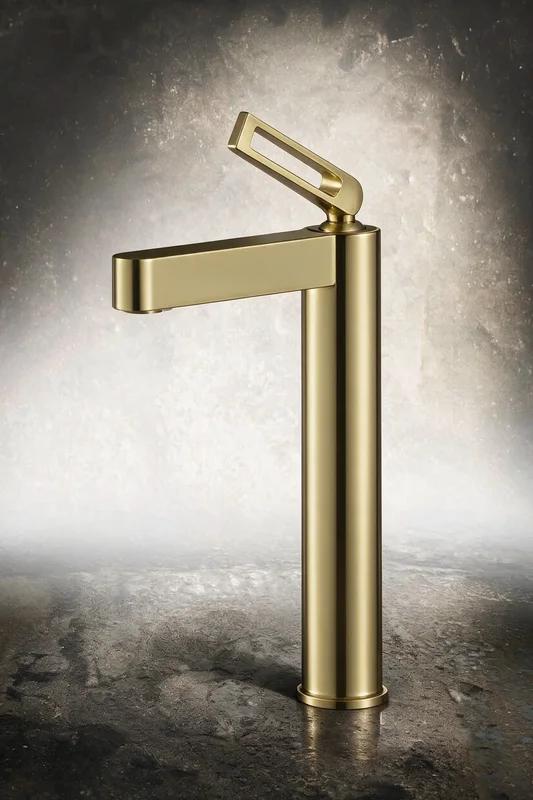
Brushed gold Sternhagen Elbe tall basin mixer with an open loop handle.
Frequently Asked Questions
1. What is the difference between a wall-mounted and deck-mounted basin mixer?
A wall-mounted mixer is fixed to the wall above the basin with concealed plumbing. A deck-mounted mixer sits on the basin or countertop and connects from below.
2. Which basin mixer is better for a countertop basin?
A wall-mounted mixer or a tall deck-mounted mixer, depending on the basin’s height and dimensions. Make sure the spout clears the rim and lands water near the drain.
3. Are wall-mounted basin mixers difficult to install?
They need more planning: wall plumbing, an in-wall body set before tiling and accurate positioning. Use a professional plumber.
4. Can I replace a deck-mounted basin mixer with a wall-mounted one?
Often, but it usually means rerouting the hot and cold supplies into the wall, fitting an in-wall body and re-tiling, and the old tap hole must be covered or the basin changed. Check feasibility with a plumber first.
5. Which basin mixer is easier to clean?
A wall-mounted mixer, because there is no base on the counter for water and grime to collect around.
6. Are wall-mounted basin mixers more expensive?
Not always. Total cost depends on the product, plumbing work and installation; it is often higher when wall plumbing must be changed.