By Sternhagen Editorial Team
The main types of shower systems are rain, handheld, fixed, concealed, exposed, thermostatic and digital showers. Some describe the water outlet, some the installation and some the temperature control – so one shower can belong to several types. Here is how each works and how to choose.
What Is a Shower System?
A shower system is the combination of components that delivers and controls water for showering. Depending on the design, it may include an overhead showerhead, a handheld shower, a mixer or control valve, a diverter and other fittings. A showerhead is just one component; a complete system connects several parts. Systems differ in installation style, water delivery, temperature control and features.
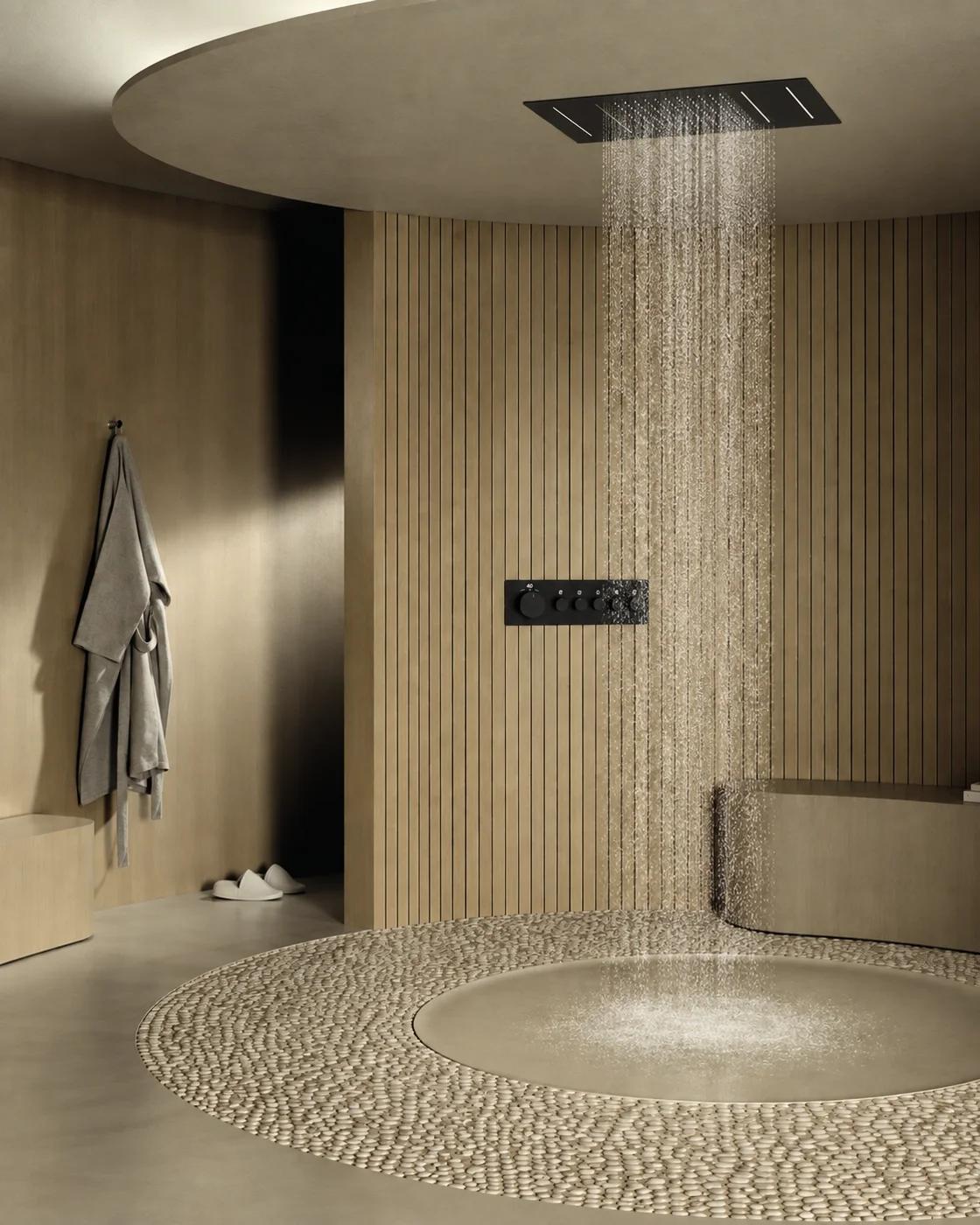
Ceiling-flushed rain shower falling into a curved walk-in shower with wooden panelling.
Different Types of Shower Systems
These are overlapping categories, not seven separate systems. A concealed shower can also be thermostatic and use a rain showerhead.
1. Rain Shower System
A wide overhead showerhead, ceiling- or wall-mounted, creates a gentle rainfall-style spray. Common in modern and luxury bathrooms, rain showers need suitable flow and pressure for the chosen head – a very large head on a weak supply can feel soft.
Best for: homeowners who prefer a gentle overhead shower.
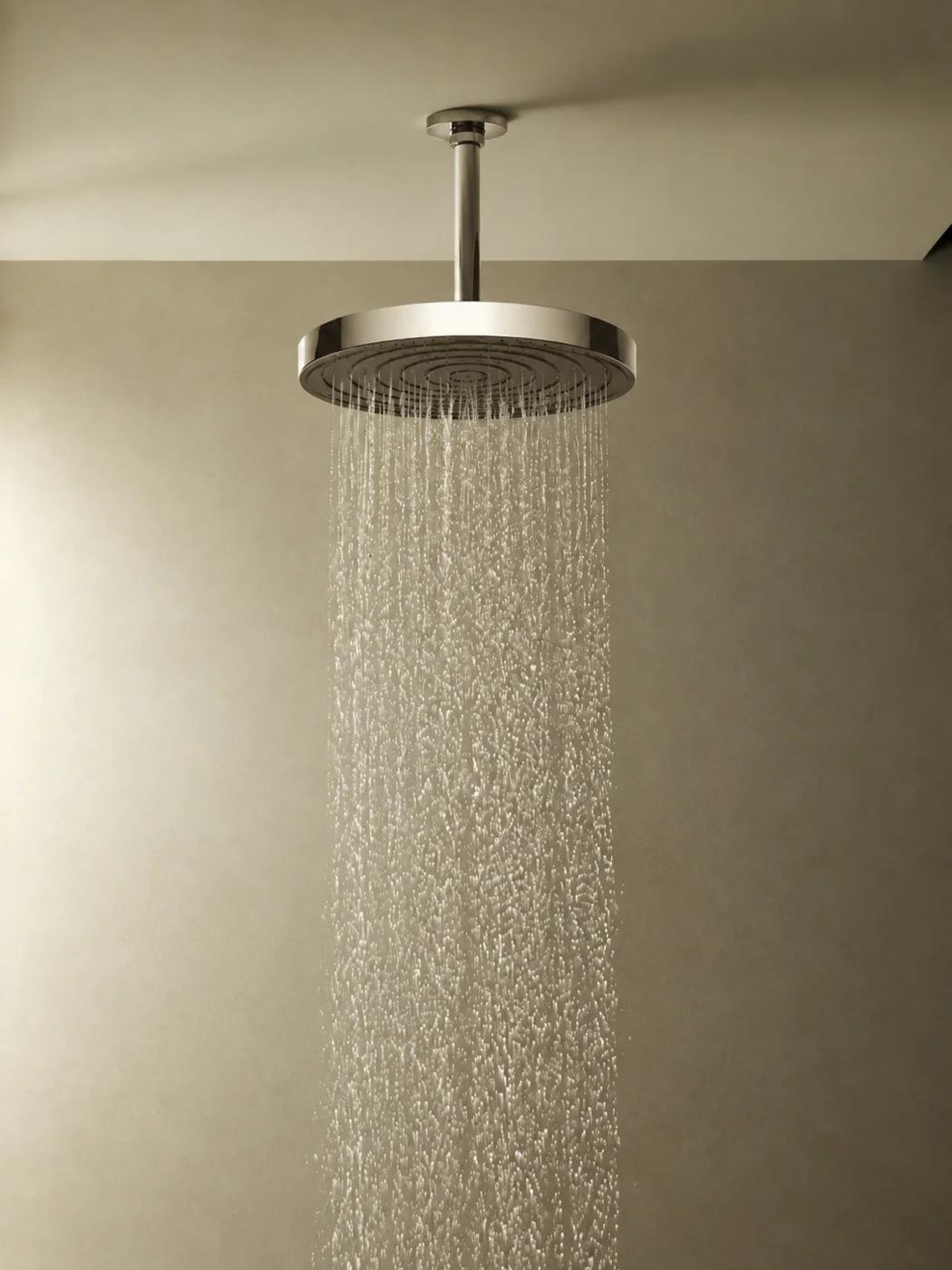
Round overhead rain shower head on a ceiling arm releasing a soft, even spray.
2. Handheld Shower System
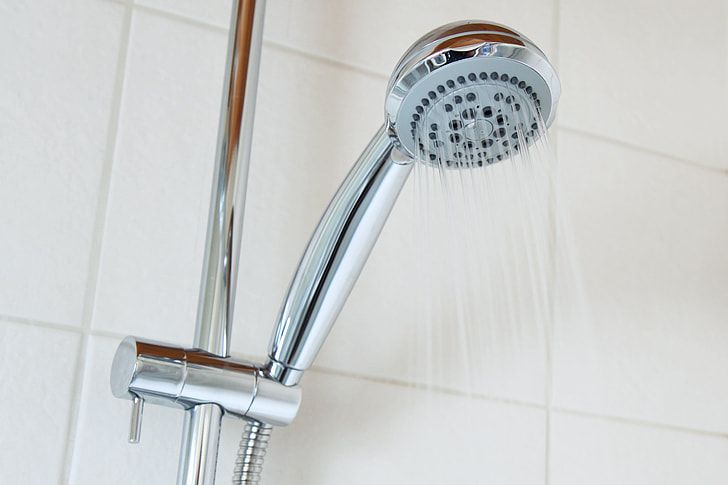
A detachable showerhead on a flexible hose lets you direct the water – useful for everyday showering, rinsing and cleaning the shower area. It can sit on a fixed holder or an adjustable slide rail.
Best for: family bathrooms and users who prefer flexibility.
3. Fixed Shower System
A showerhead fixed to the wall or ceiling, available in different sizes and spray patterns. It is simple and uncluttered but less flexible than a handheld shower.
Best for: bathrooms where a straightforward arrangement is preferred.
4. Concealed Shower System
Pipes and the valve or diverter body are built into the wall, leaving only the controls and outlets visible. It looks clean and minimalist but needs careful planning: the in-wall body must be set at the right depth before tiling, the wall properly waterproofed, the pipework pressure-tested, and the cartridge accessible for servicing.
Best for: new bathrooms, major renovations and minimalist interiors.
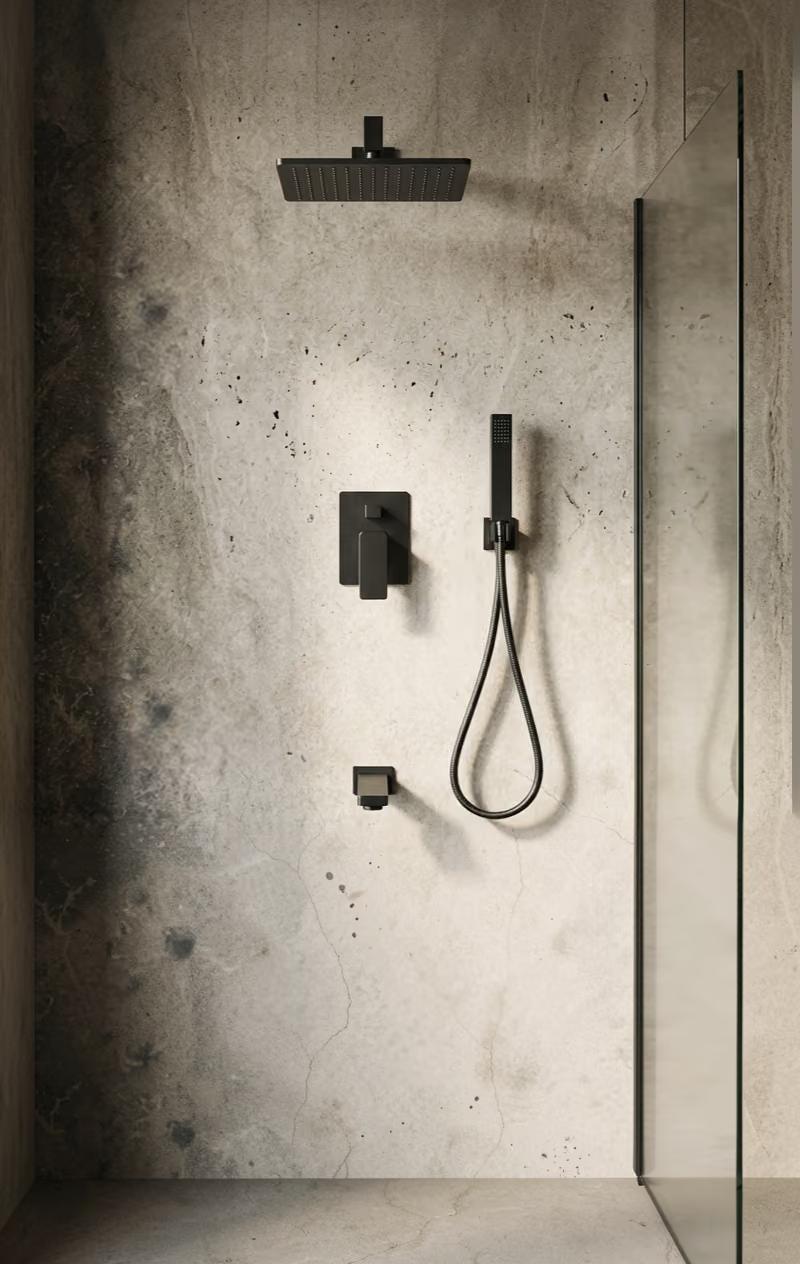
Matte black concealed shower system with overhead shower, hand shower and wall controls on a stone-effect wall.
5. Exposed Shower System
Controls and some pipework sit on the wall surface, often as a bar mixer with a riser or a shower column. Exposed systems can suit renovations because less work happens inside the wall, and they come in modern and traditional designs.
Best for: bathrooms where exposed fittings suit the design or installation.
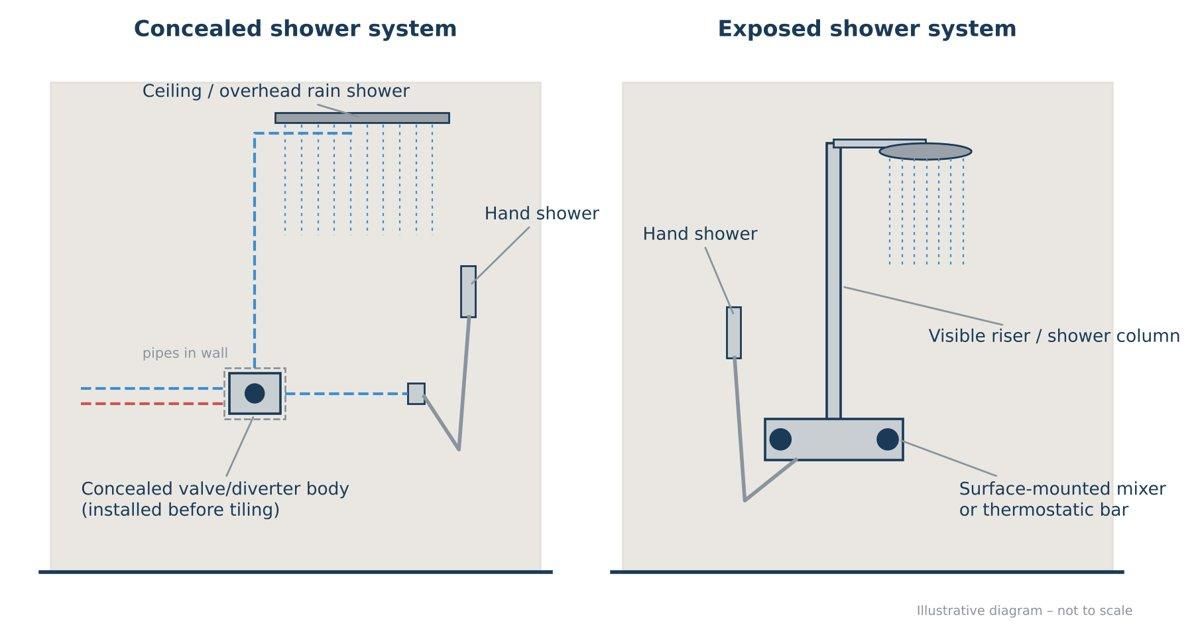
Diagram comparing a concealed shower system with pipes and valve built into the wall against an exposed shower system with a visible riser and surface-mounted mixer.
6. Thermostatic Shower System
A thermostatic valve helps maintain your chosen temperature and reduces fluctuations when used within its operating requirements. Many include a safety stop around 38 °C that you press to go hotter, which is useful in homes with children or older family members. It needs compatible hot and cold supplies, ideally at balanced pressures.
Best for: households prioritising temperature stability and comfort.
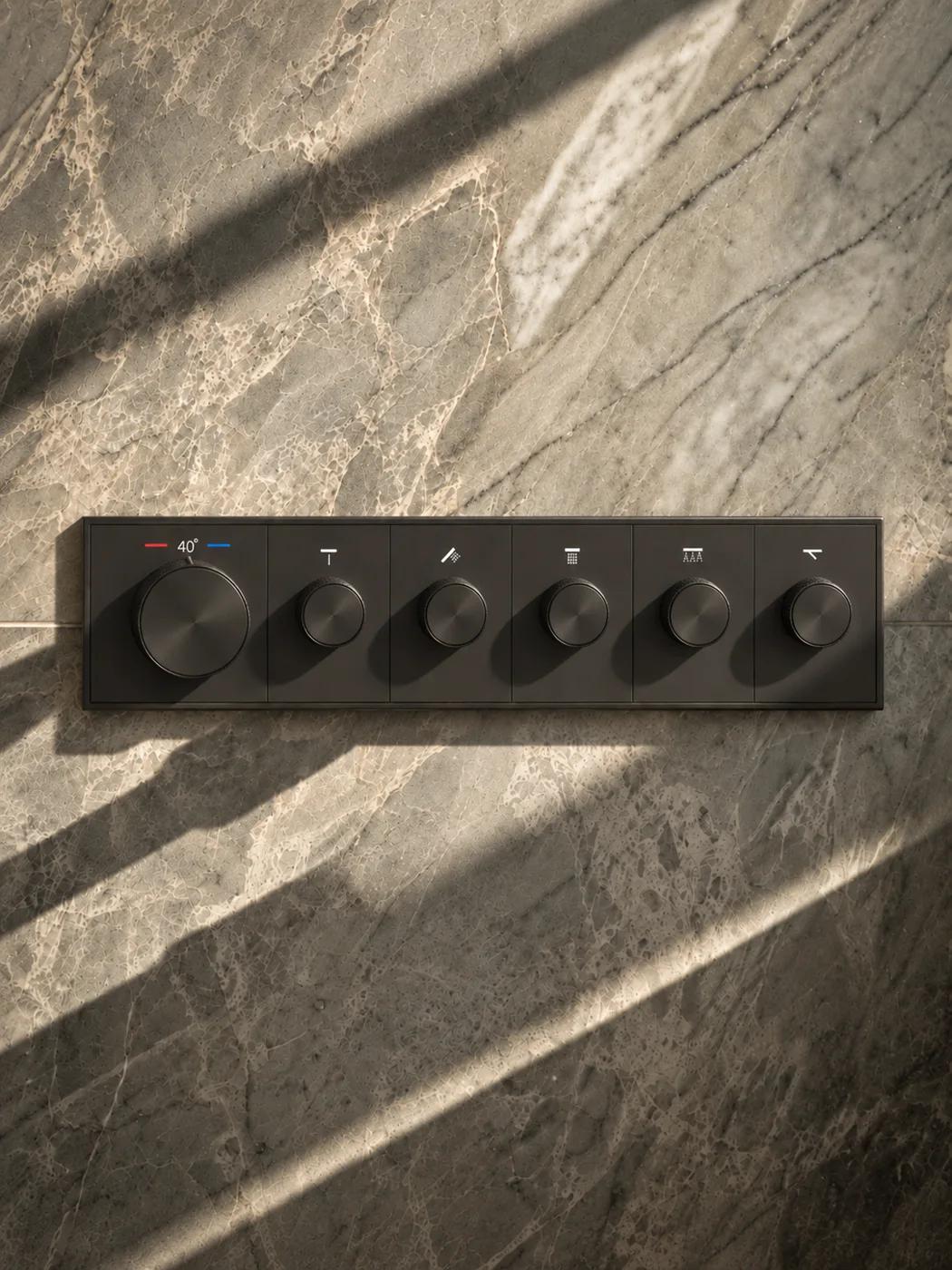
Matte black Sternhagen Pitze thermostatic diverter with multiple control knobs on a marble wall.
7. Digital or Smart Shower System
Electronic controls manage temperature, flow or other functions, and some models offer presets. These systems may need an electrical connection and compatible plumbing, and are more complex to install and service, so choose a supplier with good after-sales support.
Best for: homeowners interested in extra convenience and technology.
Types of Shower Systems Compared
| Shower System Type | Main Feature | Best Suited For |
|---|---|---|
| Rain Shower | Wide overhead water coverage | Spa-style showering |
| Handheld Shower | Flexible, movable showerhead | Everyday convenience |
| Fixed Shower | Stationary showerhead | Simple bathroom setups |
| Concealed Shower | Hidden plumbing and controls | Minimalist bathrooms |
| Exposed Shower | Visible controls and fittings | Selected renovation projects |
| Thermostatic Shower | Temperature regulation | Comfort and temperature stability |
| Digital Shower | Electronic controls | Technology-focused bathrooms |
Single-Outlet vs Multi-Outlet Shower Systems
Single-Outlet Shower Systems
These run one outlet, such as a fixed or handheld shower. They are simple to use and suit most bathrooms.
Multi-Outlet Shower Systems
These can combine an overhead shower, hand shower and body jets. A diverter sends water from the mixer to the outlet you select – a 2-way diverter serves two outlets, 3-way and larger serve more. Some systems run outlets together, which needs more flow and pressure. The number of outlets is separate from temperature control: a multi-outlet system can be manual or thermostatic. See Wall Mixer vs Diverter for more.
Which Shower System Is Best for Your Bathroom?
For Small Bathrooms
Compact fixed or handheld arrangements work well, and concealed systems keep walls tidy. Check the shower area and installation requirements first.
For Modern and Luxury Bathrooms
Rain showers, concealed systems and thermostatic controls with matching finishes. Choose features you will actually use, not just for appearance.
For Family Bathrooms
A handheld shower on a slide rail gives flexibility for children and for cleaning the shower area. Add thermostatic control where suitable, and choose clearly marked, easy-to-use controls within everyone’s reach.
For Renovating an Existing Bathroom
Consider existing pipework and wall access. Exposed systems are often easier to fit; concealed systems usually need wall chasing, waterproofing and re-tiling.
Important Things to Consider Before Buying a Shower System
- Water pressure and flow: check the system’s recommended pressure and flow. Tank-fed pressure is roughly 0.1 bar per metre of height, so a tank just above the bathroom may give a gentle flow. Large heads and multi-outlet systems need more; a plumber can advise on a booster pump.
- Hot water supply: make sure your water heater can supply the system. A large rain head uses more hot water per minute than a standard head, so check the geyser’s capacity and recovery time, especially if several outlets may run at once.
- Installation type: choose exposed or concealed based on your plumbing and renovation plans.
- Temperature control: a manual mixer lets you blend hot and cold yourself; a thermostatic valve holds a set temperature but needs compatible supplies.
- Showerhead and spray options: decide which overhead, handheld and adjustable sprays suit how you shower.
- Material and finish: check build quality, finish durability and ease of cleaning.
- Maintenance and service access: clean nozzles regularly to prevent limescale, and check how cartridges are replaced and concealed parts accessed.
Explore Shower Systems by Sternhagen
Sternhagen’s shower collection, part of the An Ode to Germany collection, comes in Chrome Plated, Black Matt, Brushed Gold and Gun Grey. It includes ceiling-flushed multi-function showers – Brunn (rain, dual waterfall and mist), Lauf (rain column and side-wing rain) and Neptune – plus Head & Hand Showers, the FK Shower Suite, and the Pitze 1, 2 and 3 thermostatic diverters, with independent on/off click buttons and a child safety lock above 38 °C.
Complete the space with Sternhagen’s bathroom accessories, and for a wellness bathroom read Steam Bath at Home: Benefits & How It Differs from a Sauna.
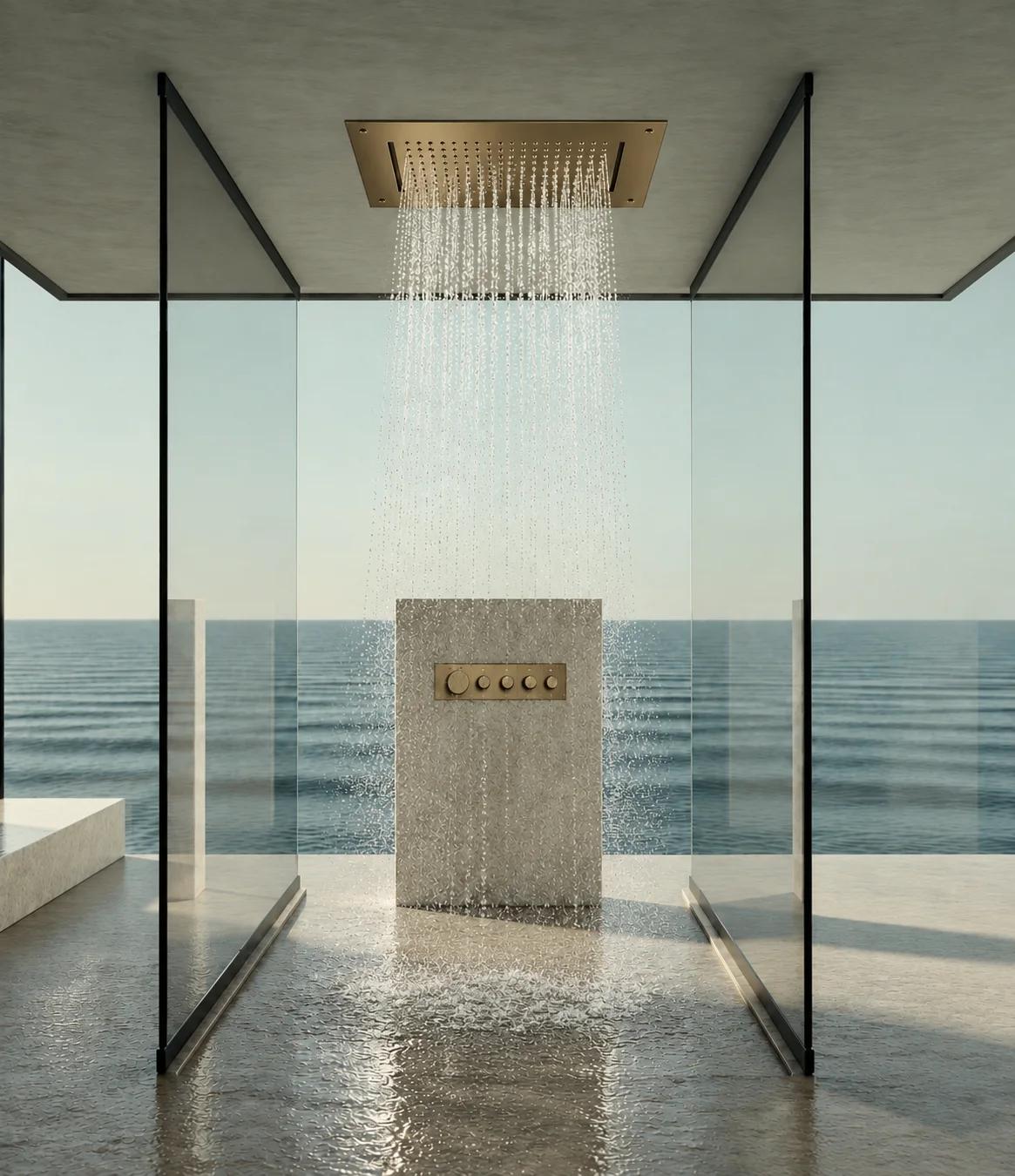
Sternhagen Brunn ceiling-flushed shower above a glass shower enclosure overlooking the sea.
Frequently Asked Questions
1. What are the main types of shower systems?
Rain, handheld, fixed, concealed, exposed, thermostatic and digital showers. They are classified by outlet, installation and temperature control, so one shower can fit several types.
2. What is the difference between a concealed and exposed shower system?
A concealed system hides pipes and the valve body in the wall, leaving only controls and outlets visible. An exposed system has the mixer and some pipework on the wall surface and is often easier to fit in renovations.
3. Which shower system is best for a small bathroom?
A compact fixed or handheld shower, or both, works well. A concealed system can make the space look tidier.
4. What is the difference between a rain shower and a regular shower?
A rain shower uses a wide overhead head for gentle, vertical coverage over a larger area. A regular showerhead is smaller and more focused. Rain showers may need more flow and a ceiling or arm mounting.
5. Is a thermostatic shower better than a manual mixer shower?
A thermostatic shower keeps a steadier temperature and often has a safety limit, but costs more and needs compatible supplies. A manual mixer is simpler and more affordable.
6. Can I install a rain shower in an existing bathroom?
Usually, depending on your plumbing, water pressure, available space and installation work. A wall-arm rain shower is often easier to add than a ceiling-flushed one.