By Sternhagen Editorial Team
Wall-Hung vs Floor-Mounted Toilet: Key Differences
Wall-hung and floor-mounted toilets are both common in modern homes, but they differ in installation, appearance, cleaning, maintenance and space requirements. A wall-hung toilet is fixed to a support frame and floats above the floor; a floor-mounted toilet stands on the floor. Here is the quick comparison:
| Feature | Wall-Hung Toilet | Floor-Mounted Toilet |
|---|---|---|
| Installation | Mounted on a structural support frame | Fixed to the floor |
| Appearance | Floating, minimalist design | Traditional or modern designs |
| Floor space | Keeps floor underneath clear | Occupies floor space |
| Cistern | Usually concealed behind the wall | Exposed or concealed, depending on model |
| Cleaning | Easier access to floor underneath | Requires cleaning around the base |
| Installation cost | Often higher due to frame and concealed cistern | Often simpler with compatible existing plumbing |
| Maintenance | Requires access to concealed components | Exposed cisterns are generally easier to access |
| Best for | Modern bathrooms and planned renovations | Everyday bathrooms and many renovation projects |
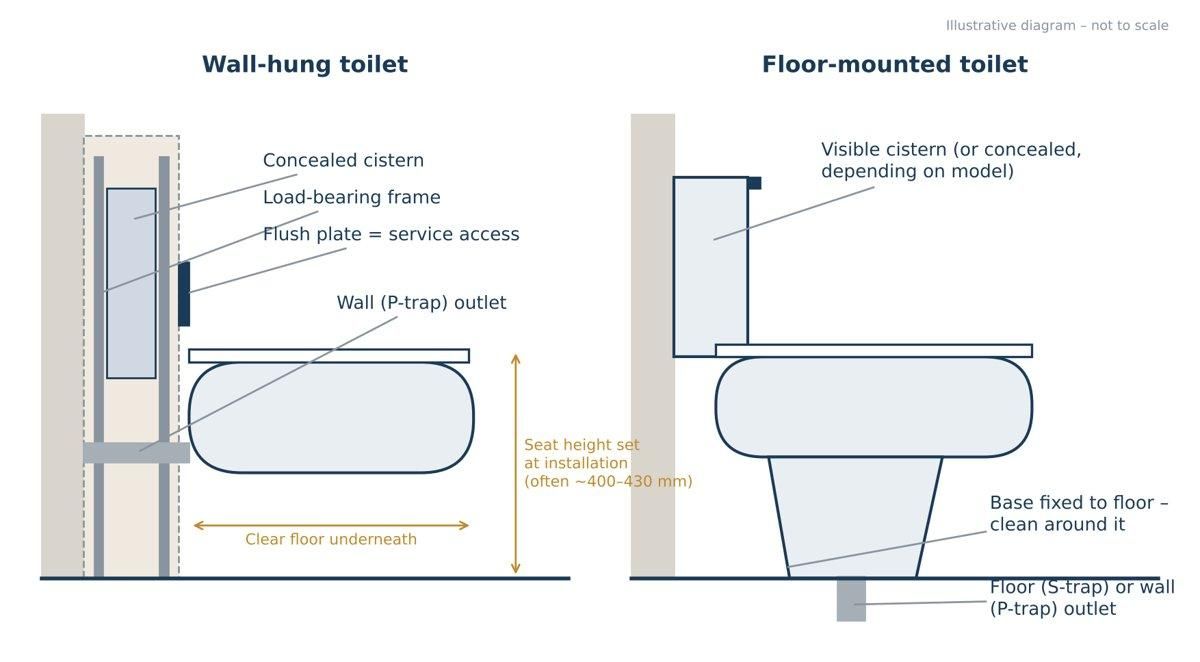
Diagram comparing a wall-hung toilet with support frame, concealed cistern and flush plate access to a floor-mounted toilet fixed to the floor.
What Is a Wall-Hung Toilet?
A wall-hung toilet (or wall-mounted commode) is fixed above the floor on a load-bearing support frame. The cistern is usually concealed inside the wall or a built-out duct, so only the bowl and flush plate are visible – and the flush plate doubles as the access panel for the cistern. Wall-hung toilets are common in modern and minimalist bathrooms.
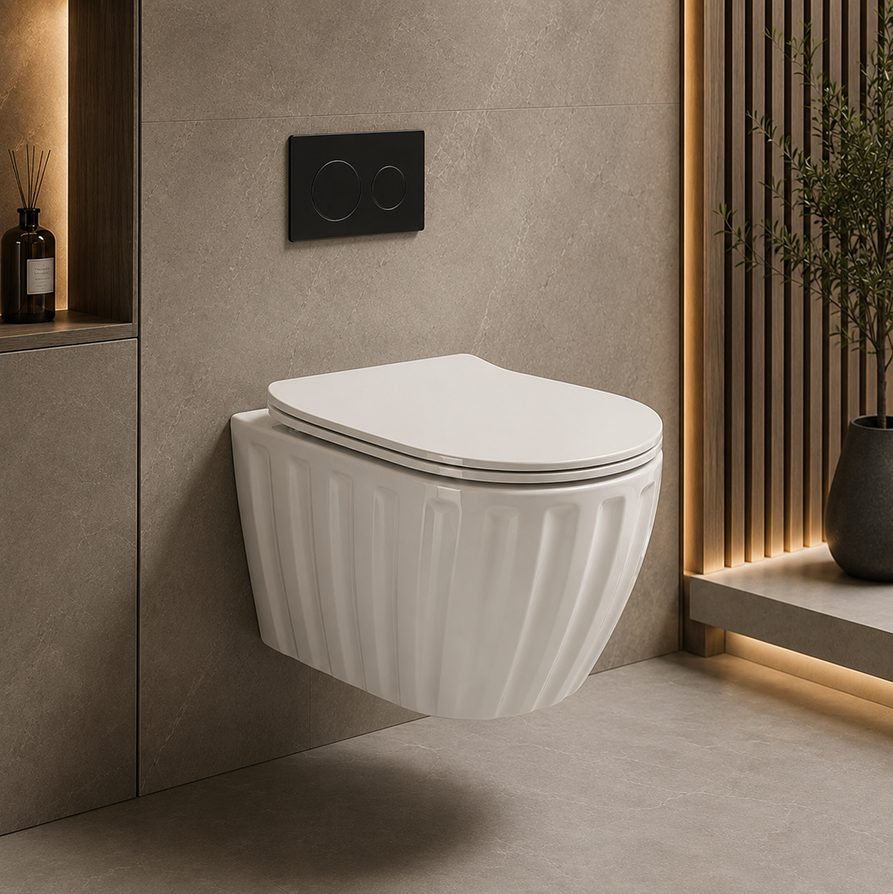
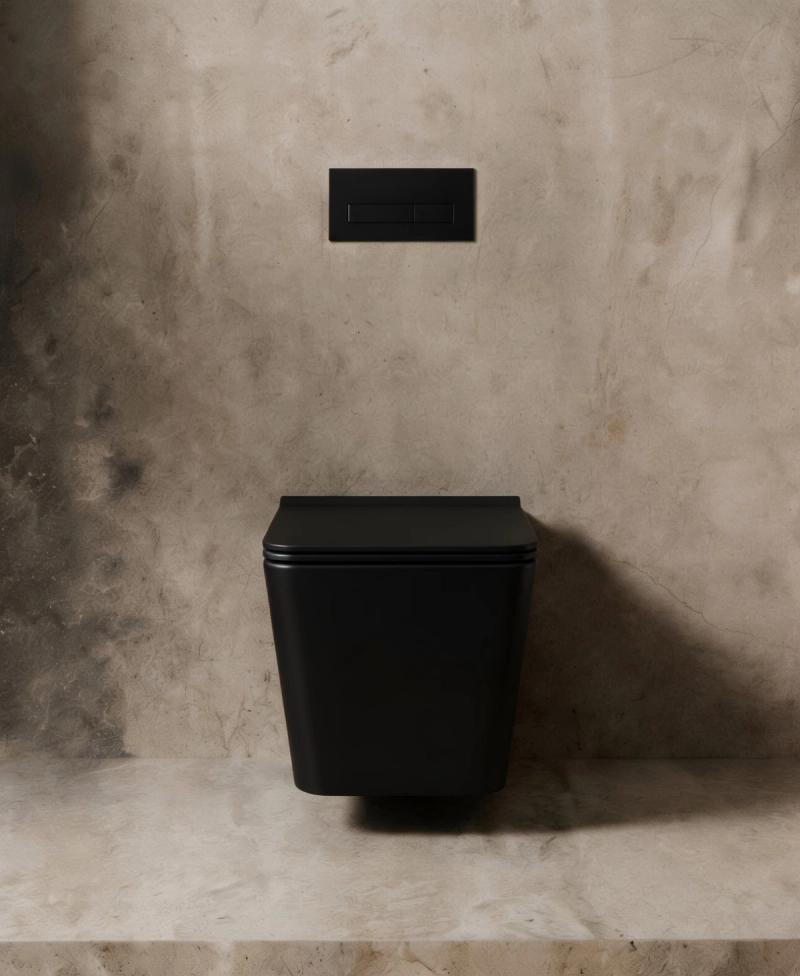
White Sternhagen SK Shell wall-hung toilet with a black flush plate above it.
Advantages of Wall-Hung Toilets
- Clean, contemporary appearance.
- The floor underneath is easy to clean.
- Can make compact bathrooms feel more open.
- Height can be set to suit users, within the product’s specifications.
Disadvantages of Wall-Hung Toilets
- Needs a suitable structural frame and professional installation.
- Higher initial cost for the frame, concealed cistern and labour.
- Concealed cistern repairs depend on proper service access.
- May mean opening walls and re-tiling in an existing bathroom.
What Is a Floor-Mounted Toilet?
A floor-mounted toilet is supported by and fixed to the bathroom floor. It comes in one-piece, two-piece (close-coupled) and back-to-wall designs, with an exposed or concealed cistern depending on the model, and is the most common type in homes. For every design, see our guide to the types of water closets.
Advantages of Floor-Mounted Toilets
- Often simpler to install with compatible existing plumbing.
- Wide choice of designs and price ranges.
- Exposed cisterns are easy to access for maintenance.
- Suits new bathrooms and renovations.
Disadvantages of Floor-Mounted Toilets
- The base occupies floor space.
- Cleaning around the base takes more effort.
- Some designs have more visible joints and fixings.
- Can look bulkier, depending on the model.
Wall-Hung vs Floor-Mounted Toilet: Which Is Better?
1. Bathroom Space and Layout
A wall-hung toilet leaves the floor visible, which feels more open. But the frame and concealed cistern need extra wall depth, often a build-out of around 150–200 mm unless they fit in an existing duct. The toilet’s projection from the wall and the clearance in front matter more than appearance, and compact floor-mounted models can be equally practical.
2. Design and Appearance
Wall-hung toilets suit minimalist bathrooms, while floor-mounted toilets come in both traditional and modern designs. Either can work in a luxury bathroom when the design and finishes are right – the shape of the bowl, the flush plate finish and how the toilet coordinates with the basin and fittings matter more than the mounting style.
3. Installation Requirements
A wall-hung toilet needs a rated support frame anchored to a sound floor and wall, a concealed cistern and a wall drainage outlet at the correct height, all fitted and tested before tiling. A floor-mounted toilet uses the floor for support and can often reuse an existing floor (S-trap) or wall (P-trap) outlet. Switching between the two usually means changes to walls, drainage and plumbing.
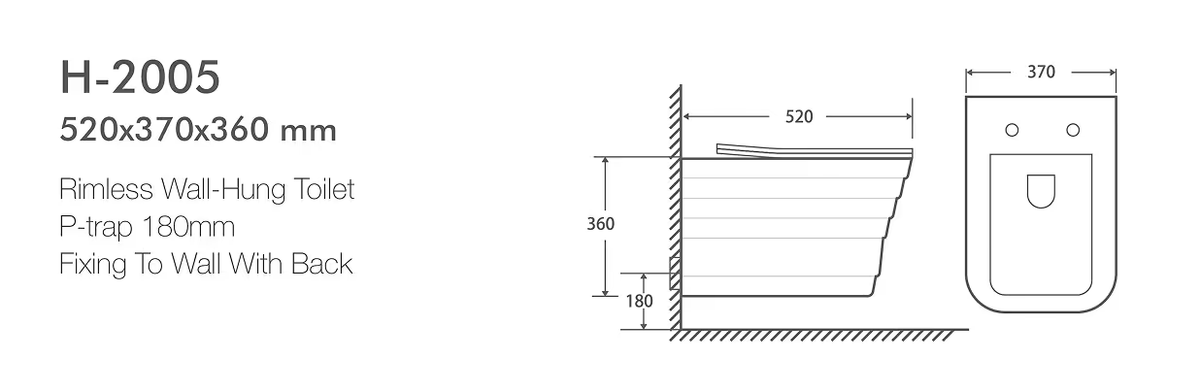
Sternhagen Wrinkle wall-hung toilet specification drawing showing a 520 x 370 x 360 mm pan and a P-trap outlet at 180 mm.
For example, Sternhagen’s Wrinkle WC specifies a P-trap outlet at 180 mm above the floor, which the frame and drainage must match.
4. Cleaning and Hygiene
A wall-hung toilet makes the floor beneath easy to clean, while a floor-mounted toilet needs cleaning around its base. Bowl design (such as rimless), glazing and cleaning habits also influence hygiene, so neither type is automatically more hygienic.
5. Maintenance and Repairs
On a wall-hung toilet, the cistern’s valves are usually reached through the flush plate opening, without breaking tiles. Floor-mounted toilets with exposed cisterns give easier access to internal parts. In both cases, maintenance depends on product design and spare-part availability. With a wall-hung toilet, choose a reputable cistern system and make sure the installer leaves the service opening behind the flush plate unobstructed, so valves and seals can be replaced without opening the wall.
6. Installation Cost and Long-Term Value
Compare the toilet price, support frame, cistern, labour and any plumbing changes. Wall-hung toilets often cost more upfront, while floor-mounted models can be more economical where existing plumbing fits. Neither type always lasts longer: a well-made toilet of either kind, installed correctly, can give many years of service.
Which Toilet Is Best for Different Bathroom Needs?
These are general recommendations, not fixed rules:
| Bathroom Requirement | Option to Consider |
|---|---|
| Small, minimalist bathroom | Wall-hung or compact floor-mounted |
| Luxury bathroom design | Either, depending on the design |
| Renovation with limited plumbing changes | Compatible floor-mounted toilet |
| Easier floor cleaning | Wall-hung toilet |
| Lower initial installation cost | Often floor-mounted |
| Concealed cistern appearance | Wall-hung or back-to-wall floor-mounted |
| Flexible installation height | Wall-hung, within system requirements |
Plan a water point and angle valve beside the WC for a health faucet before tiling – see What Is a Health Faucet?
Explore Modern Toilets by Sternhagen
Sternhagen’s water closets collection focuses on wall-hung, rimless ceramic WCs, most with soft-close UF seat covers, in sculptural designs such as Kristall, Wrinkle, SK Shell, Opale and Spark. Read our guides to the types of water closets and bidet toilets, or use the store locator to see them in person.
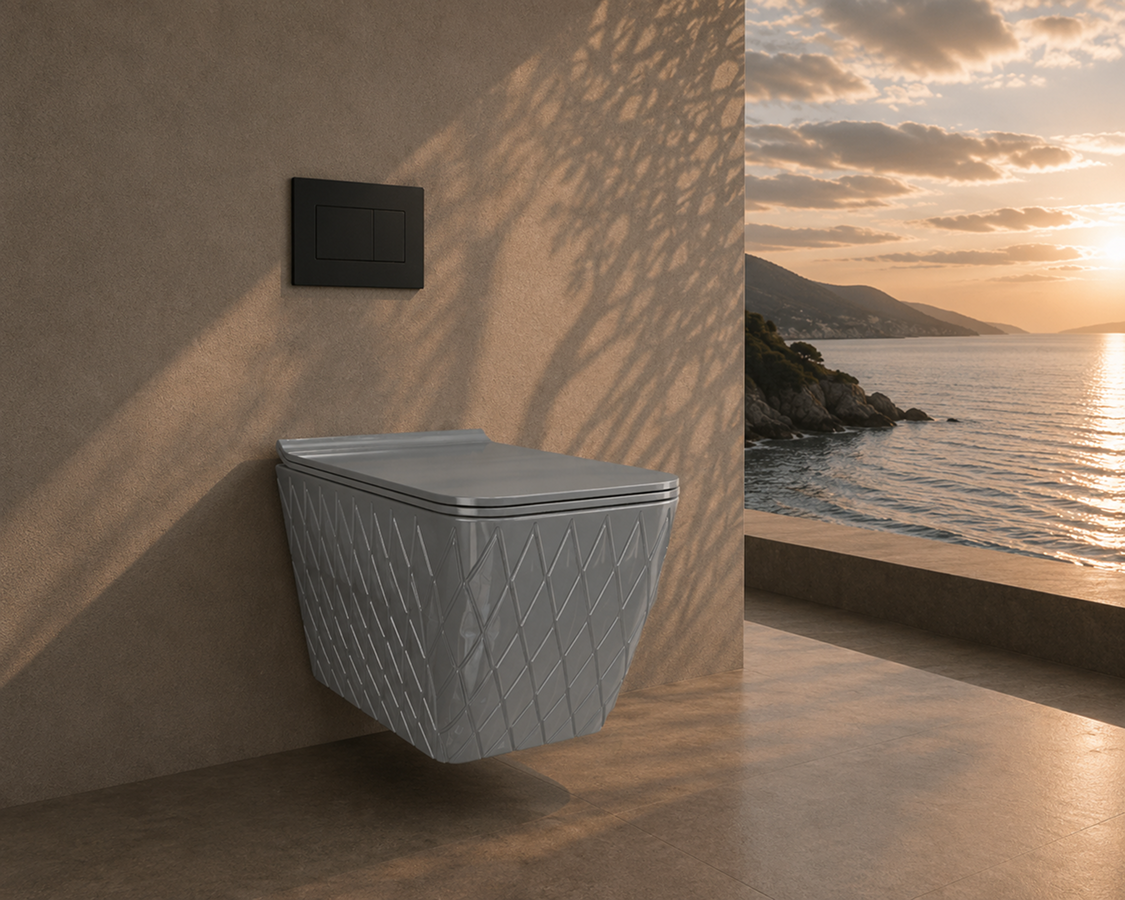
Grey Sternhagen Spark wall-hung WC with a textured finish and black flush plate.
Frequently Asked Questions
1. Which is better, a wall-hung or floor-mounted toilet?
A wall-hung toilet suits new builds and major renovations where you want a minimalist look and easy floor cleaning. A floor-mounted toilet is often more practical and economical when you want to keep existing plumbing.
2. Are wall-hung toilets strong and safe?
Yes, when properly installed. They are carried by a support frame designed and tested for a specified load and anchored to the floor and wall. Use a frame from a reputable manufacturer, check its stated load rating, and have it installed to the manufacturer’s instructions.
3. Do wall-hung toilets save space?
They save visible floor space, but the frame and concealed cistern need wall depth. The real saving depends on the wall build-up and the toilet’s projection.
4. Are wall-hung toilets difficult to maintain?
Not usually. Cistern valves are normally reached by removing the flush plate. Choose a system with available spare parts and keep the access opening clear.
5. Which toilet is easier to clean?
A wall-hung toilet gives easy access to the floor beneath, while a floor-mounted toilet needs cleaning around its base. Bowl design also matters.
6. Can I replace a floor-mounted toilet with a wall-hung toilet?
Often, but you will need to check structural support, wall depth for the frame and cistern, drainage position and water supply, and refinish the wall. Ask a plumber to assess it first.