By Sternhagen Editorial Team
The main types of water closets are wall-hung, floor-mounted, one-piece, two-piece, back-to-wall and smart WCs. They are grouped by how they are installed, how they are built and what features they offer. Understanding these categories makes it easier to compare toilets and choose one that suits your bathroom.
What Is a Water Closet (WC)?
A water closet (WC) is a toilet that uses water to flush waste into the drainage system. The term is widely used for modern flush toilets in homes, hotels and offices. Water closets come in different designs based on installation, construction, flushing system and features, and these categories often overlap.
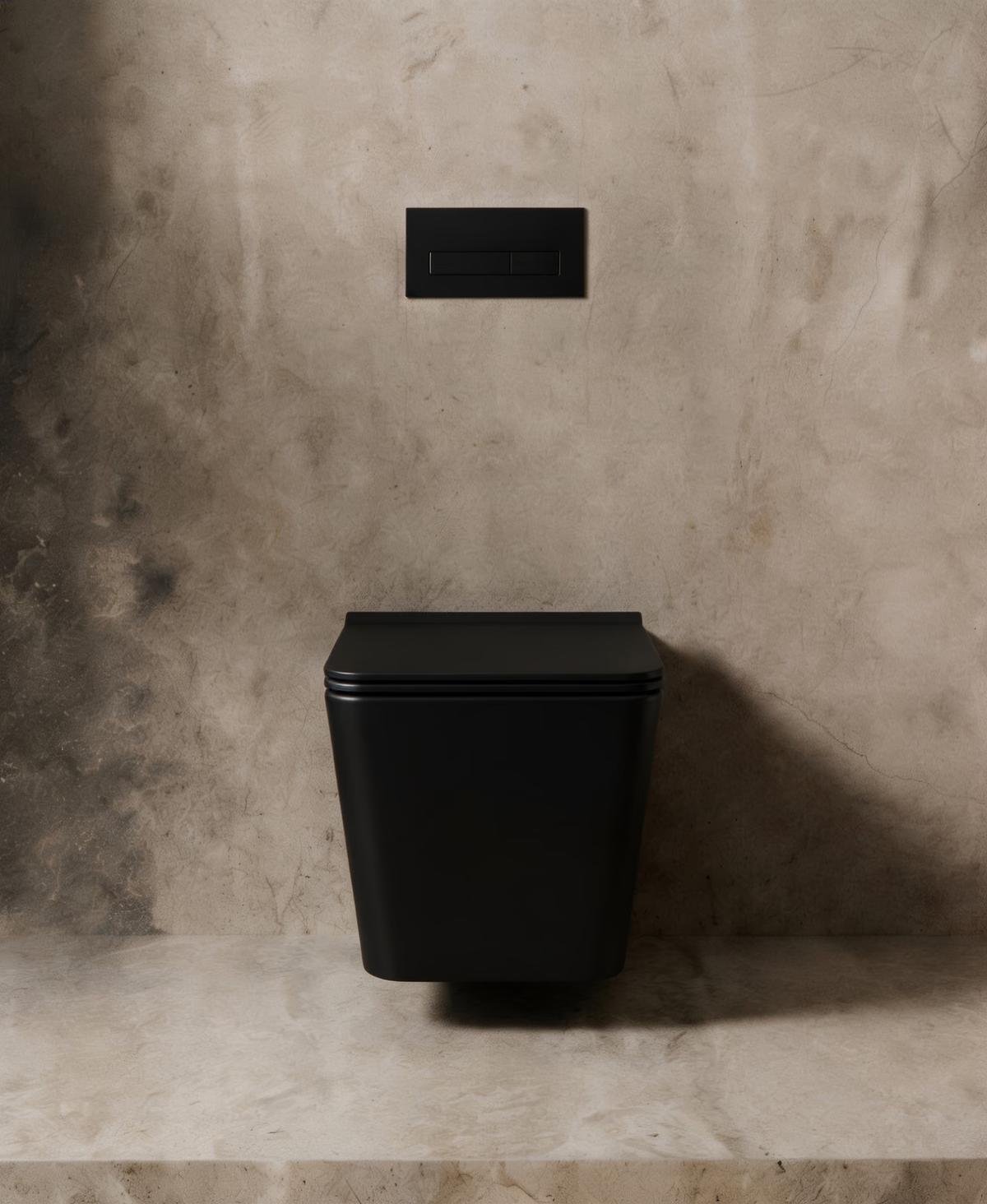
A matte black wall-hung water closet with a matching black flush plate against a warm stone wall.
Different Types of Water Closets
These types are not mutually exclusive. A one-piece toilet is usually floor-mounted, a back-to-wall toilet is a kind of floor-mounted toilet, and a smart toilet can be wall-hung or floor-standing.
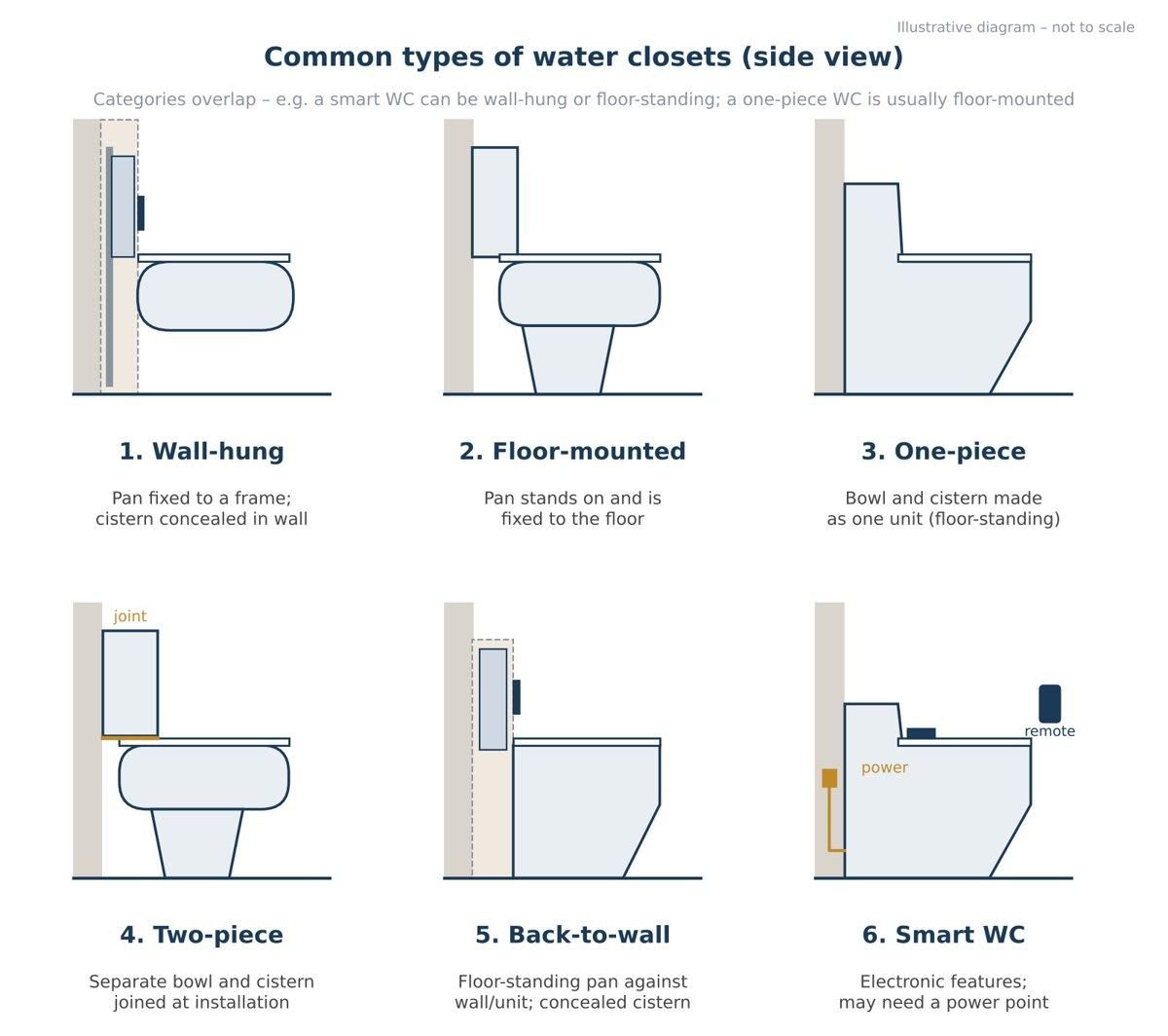
Side-view diagram of six common water closet types: wall-hung, floor-mounted, one-piece, two-piece, back-to-wall and smart.
1. Wall-Hung Water Closet
A wall-hung WC is fixed to a load-bearing frame inside the wall, leaving the floor underneath clear. It typically uses a concealed cistern, with only the flush plate visible. It looks clean and modern and makes floor cleaning easy, but it needs proper structural support, wall depth for the frame and cistern, and service access – usually through the flush plate.
Best for: modern bathrooms, compact spaces and minimalist interiors.
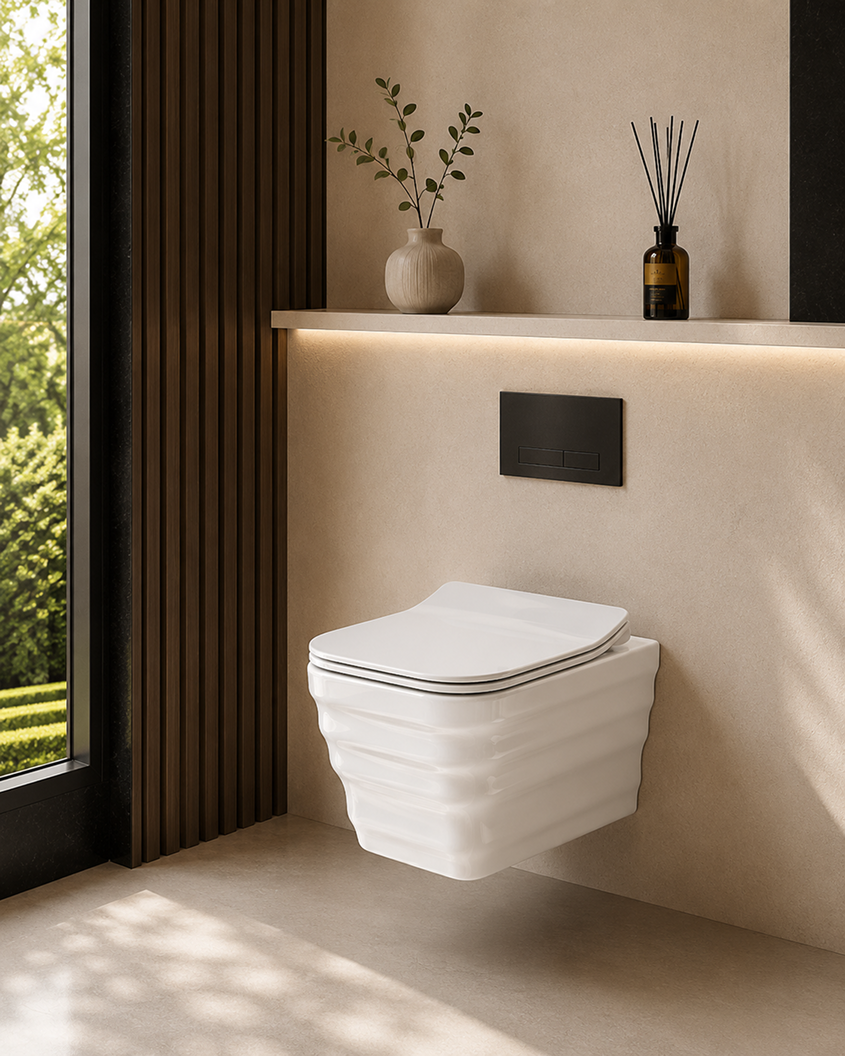
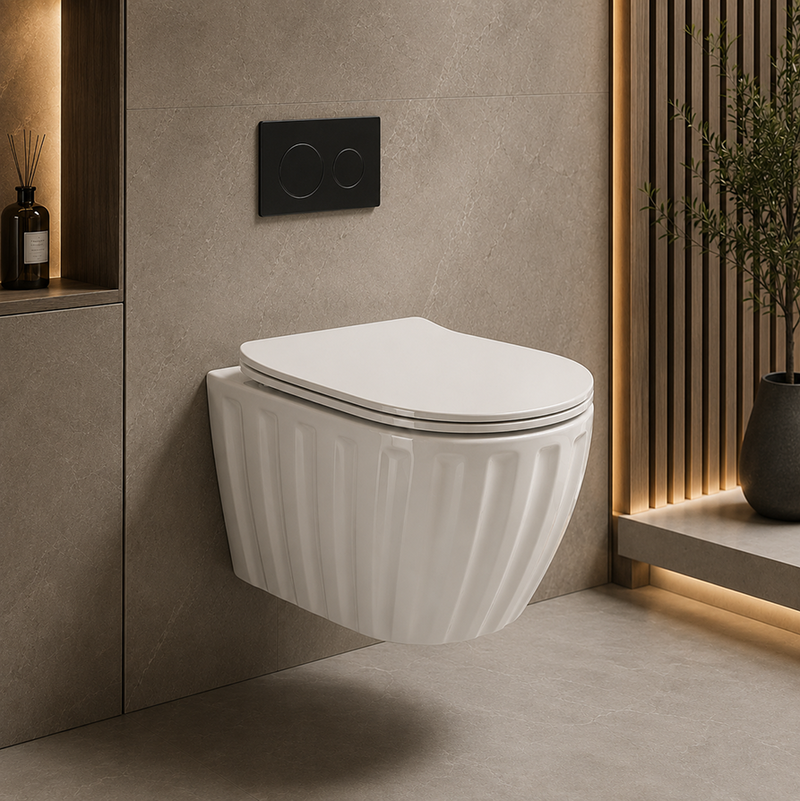
White Sternhagen Wrinkle rimless wall-hung WC with a concealed cistern flush plate.
2. Floor-Mounted Water Closet
A floor-mounted WC stands on and is fixed to the floor. It is common in homes, comes in many sizes and designs, and is usually straightforward to install where compatible plumbing exists – with an outlet through the floor (S-trap) or the wall (P-trap). You will need to clean around its base.
Best for: everyday bathrooms, renovations and homes with existing floor-mounted plumbing.
3. One-Piece Water Closet
The bowl and cistern form one integrated unit. This creates a streamlined look with fewer external joints, so it is easier to wipe clean around the tank. The single unit can be heavy to handle during installation.
Best for: contemporary bathrooms and homeowners who prefer a streamlined design.
4. Two-Piece Water Closet
The bowl and cistern are separate parts joined during installation. Two-piece WCs are common, come in many designs and are easier to handle on site, but the joint between tank and bowl needs regular cleaning and maintenance.
Best for: practical installations and buyers who want a wide range of options.
5. Back-to-Wall Water Closet
A floor-mounted toilet placed flush against the wall or a service unit, often with a concealed cistern. It hides plumbing for a neat look without needing a wall-hung frame, but access to the concealed cistern must be planned.
Best for: modern bathrooms that want a clean design with floor-mounted support.
6. Smart Water Closet
A smart WC adds electronic or automatic features, depending on the model, such as bidet washing, a heated seat or automatic flushing. Many need a properly earthed electrical connection near the toilet and cost more to buy and maintain. See Bidet Toilets Explained for integrated washing options.
Best for: technology-focused bathrooms and homeowners seeking extra comfort and hygiene features.
Types of Water Closets Compared
| Water Closet Type | Main Feature | Best Suited For |
|---|---|---|
| Wall-Hung WC | Suspended above the floor | Modern, minimalist bathrooms |
| Floor-Mounted WC | Supported by the floor | General residential bathrooms |
| One-Piece WC | Integrated bowl and cistern | Streamlined bathroom designs |
| Two-Piece WC | Separate bowl and cistern | Practical, conventional installations |
| Back-to-Wall WC | Concealed or neatly arranged plumbing | Clean, modern bathroom layouts |
| Smart WC | Additional electronic features | Comfort and convenience |
Different Water Closet Flushing Systems
These are features or mechanisms that any of the types above can use, not separate installation types.
Single-Flush and Dual-Flush Systems
A single-flush system uses one flush volume. A dual-flush system offers a smaller and a full flush (6/3 litres is a common split). Because the smaller flush is used most often, a suitable dual-flush system can help reduce water use, depending on the product and how it is used.
Gravity-Flush Systems
Most household toilets use gravity: water stored in the cistern is released into the bowl, and its weight carries waste through the trap into the drain. Gravity systems are simple and reliable, and they don’t need high supply pressure because the cistern refills between flushes.
Rimless Toilet Designs
A rimless bowl has no hollow rim under its edge, so there is no hidden channel where dirt collects and the whole bowl is easier to clean. Rimless is a bowl design feature, not a flushing mechanism.
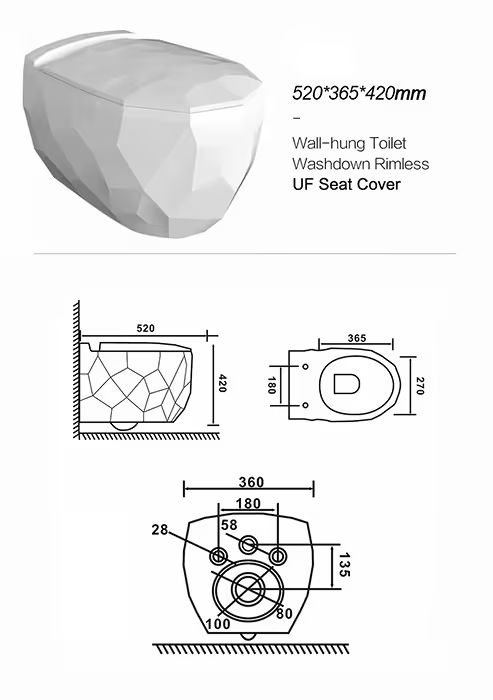
Technical drawing of the Sternhagen Lattice wall-hung toilet showing it is a washdown rimless WC, with dimensions and fixing points.
Which Type of Water Closet Is Best for Your Bathroom?
For Small Bathrooms
Wall-hung toilets can make the room feel more open, and compact floor-mounted models also work. Check the toilet’s projection from the wall and the clearance around it, and remember that a concealed cistern and frame need some wall depth.
For Modern and Luxury Bathrooms
Wall-hung, back-to-wall and selected one-piece designs suit contemporary spaces. Clean lines, coordinated finishes and concealed plumbing matter more than the type itself.
For Easy Cleaning and Maintenance
Wall-hung toilets give access to the floor, one-piece models have fewer exterior joints and rimless bowls are easier to clean. Also check access to cistern parts and spare-part availability.
For Renovating an Existing Bathroom
Your existing drainage outlet may decide the choice – check whether it runs through the floor (S-trap) or the wall (P-trap), and where it sits. Switching from floor-mounted to wall-hung usually means a frame, a concealed cistern and wall work, which adds cost.
Things to Consider Before Buying a Water Closet
- Bathroom size and layout: check floor space and clearance around the toilet.
- Installation and plumbing: match the WC to your floor or wall waste outlet and plan cistern placement and wall support. For example, Sternhagen’s Wrinkle wall-hung WC specifies a P-trap outlet at 180 mm.
- Comfort and height: consider seat height, bowl shape and who will use it.
- Flushing performance and water efficiency: compare stated flush volumes and performance – not all dual-flush toilets perform equally.
- Cleaning and maintenance: look at bowl design, glaze, component access and spare parts.
- Design and finish: coordinate with your basin, faucets and flush plate.
Plan a water point and angle valve beside the WC for a health faucet – see What Is a Health Faucet?
Explore Modern Water Closets by Sternhagen
Sternhagen’s water closets collection features wall-hung WCs with rimless bowls, most with soft-close UF seat covers, in sculptural designs and colours. Options include Kristall, Wrinkle, Lattice, Pent, SK Shell, Shin and Spark. Pair your WC with one of Sternhagen’s health faucets.
Read more in Wall-Hung vs Floor-Mounted Toilet, Bidet Toilets Explained: What They Are, Types & How to Use One and How to Choose Sanitaryware.
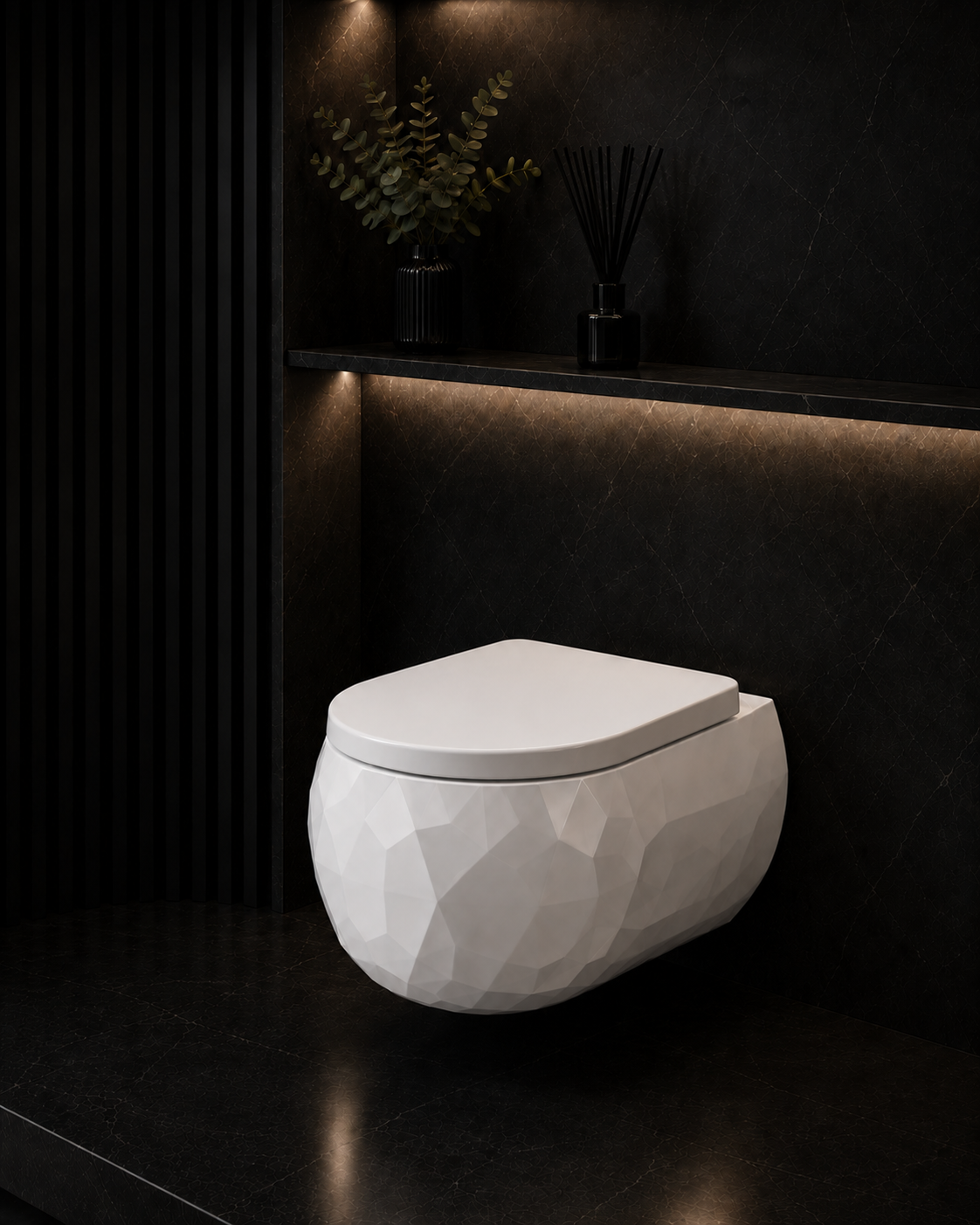
Sternhagen Pent matte white wall-hung water closet in a niche with wood panelling.
Frequently Asked Questions
1. What are the main types of water closets?
Wall-hung, floor-mounted, one-piece, two-piece, back-to-wall and smart WCs. They are classified by installation, construction and features, so one toilet can fit several categories.
2. What is the difference between a wall-hung and floor-mounted water closet?
A wall-hung WC is fixed to a concealed frame above the floor, usually with a concealed cistern. A floor-mounted WC stands on the floor. Wall-hung models leave the floor clear but need a frame and service access; floor-mounted models are often simpler to install.
3. Which type of water closet is best for a small bathroom?
Wall-hung and compact floor-mounted WCs both work. Check the toilet’s projection, the wall depth needed and the clearance around it.
4. What is the difference between a one-piece and two-piece toilet?
A one-piece toilet has the bowl and cistern as one unit – fewer joints, but heavier. A two-piece toilet has separate parts joined on site – easier to handle, but the joint needs cleaning.
5. Which water closet is easiest to clean?
Wall-hung WCs give floor access, one-piece models have fewer joints and rimless bowls are easier to clean inside. No single type is best in every respect.
6. What is the difference between a water closet and a toilet?
The terms are used interchangeably in modern bathroom product descriptions, both meaning a flushing toilet fixture. In some countries, particularly the US, “water closet” can also mean a small separate room containing the toilet.