Stand at most modern wash basins and you'll find one spout and one lever. Older bathrooms often have two separate taps instead, one for hot and one for cold. Both get water into the basin, but they feel quite different to use, and they suit different basins, plumbing set-ups and bathroom styles.
A quick note on terms: a basin mixer is technically a type of basin tap. In this guide, "basin mixer" means a single tap that blends hot and cold water before it leaves the spout, and "basin taps" means the traditional pair of separate hot and cold taps, often called pillar taps.
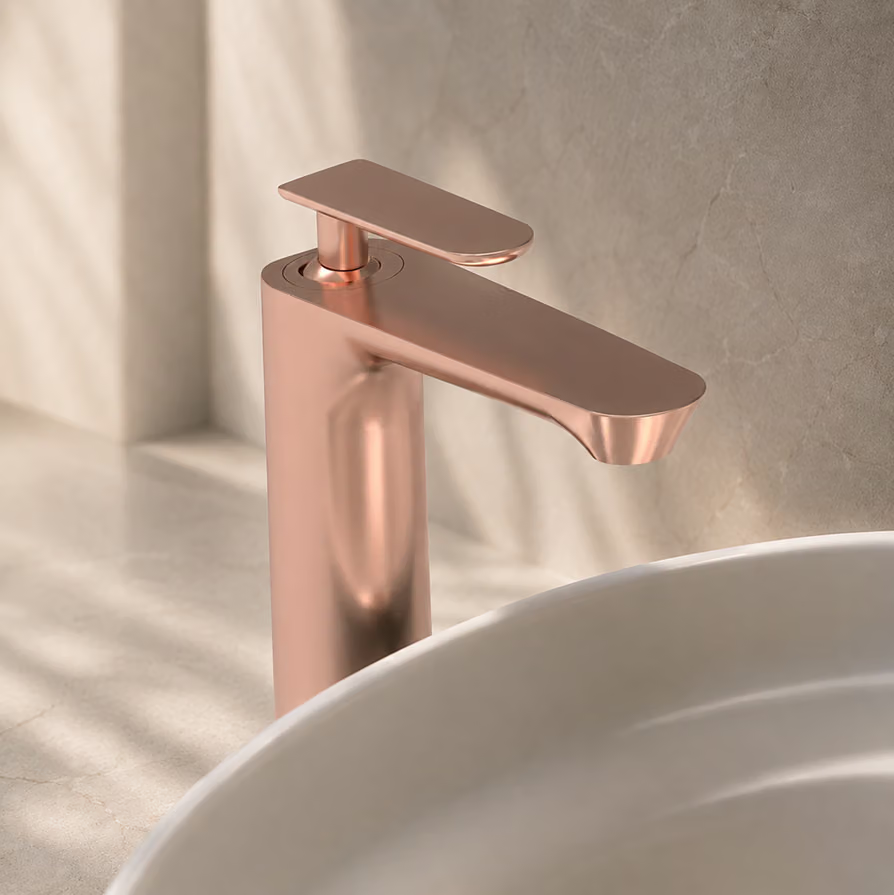
Basin Mixer vs Basin Tap: Key Differences
Both basin mixers and traditional basin taps control the water at your wash basin. The real difference is how they handle temperature and flow. A mixer blends hot and cold inside its body and delivers the result through one spout. Traditional taps keep the two supplies separate, so the water mixes in the basin, if at all. That one distinction shapes how each feels to use, how it installs and where it looks right.
| Feature | Basin Mixer | Traditional Basin Taps |
|---|---|---|
| Water control | Mixes hot and cold water | Hot and cold controlled separately |
| Number of outlets | Usually one spout | Usually two separate taps |
| Temperature adjustment | Mixed before water leaves the spout | Adjusted separately |
| Design | Often modern and minimalist | Often traditional or classic |
| Installation | Depends on mixer type and basin configuration | Typically requires two tap holes |
| Ease of use | Convenient single-outlet control | Separate controls for each supply |
| Best suited for | Modern bathrooms and everyday convenience | Traditional bathrooms or existing two-tap basins |
What Is a Basin Mixer Tap?
A basin mixer combines hot and cold water and delivers it through one outlet. Depending on the model, you control it with a single lever (lift for flow, turn for temperature) or with two handles feeding one spout.
Basin mixers come in three main forms:
- Deck-mounted mixers sit on the basin or counter, usually through one tap hole, like the Danora Basin Mixer.
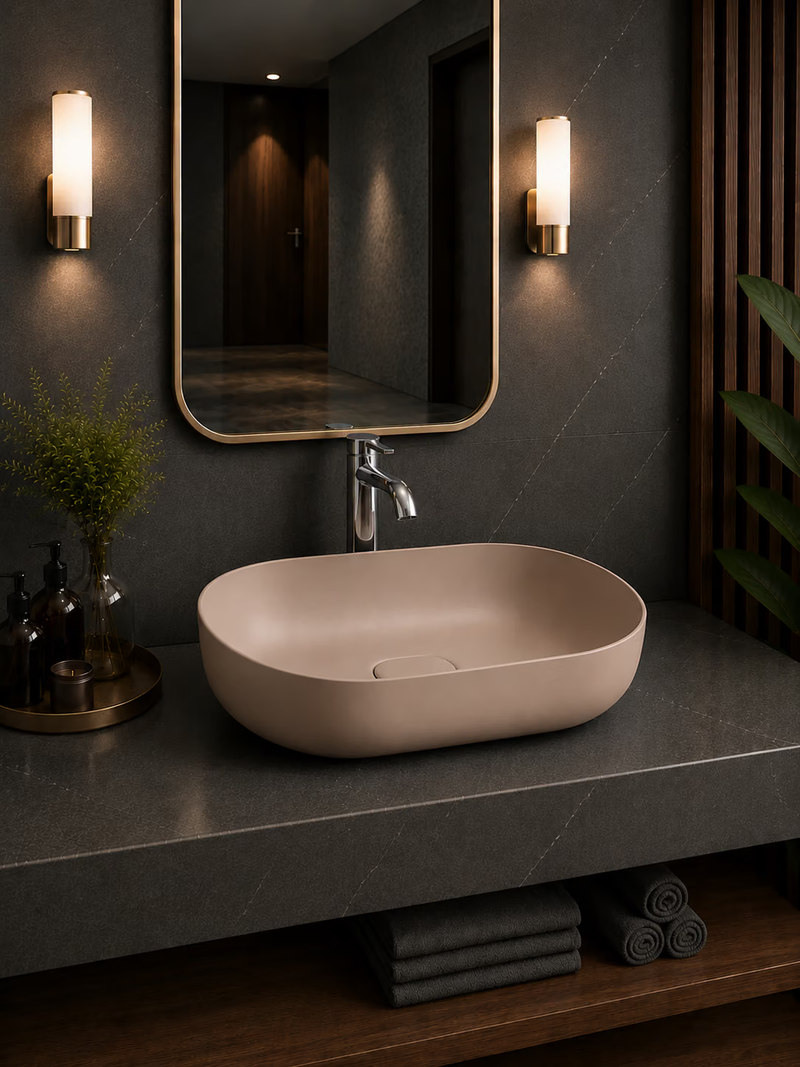
- Tall-body mixers have a raised spout that clears the rim of a countertop basin, like the Pent single-lever mixer.
- Wall-mounted mixers come out of the wall above the basin, keeping the counter clear, like the Elbe Wall Mounted Basin Mixer.
Mixers are now the standard choice in most modern bathrooms.
Advantages of Basin Mixer Taps
- Convenient temperature adjustment: you set the temperature you want, rather than switching between hot and cold.
- Single outlet: hot and cold arrive together from one spout, so washing hands or face is easier.
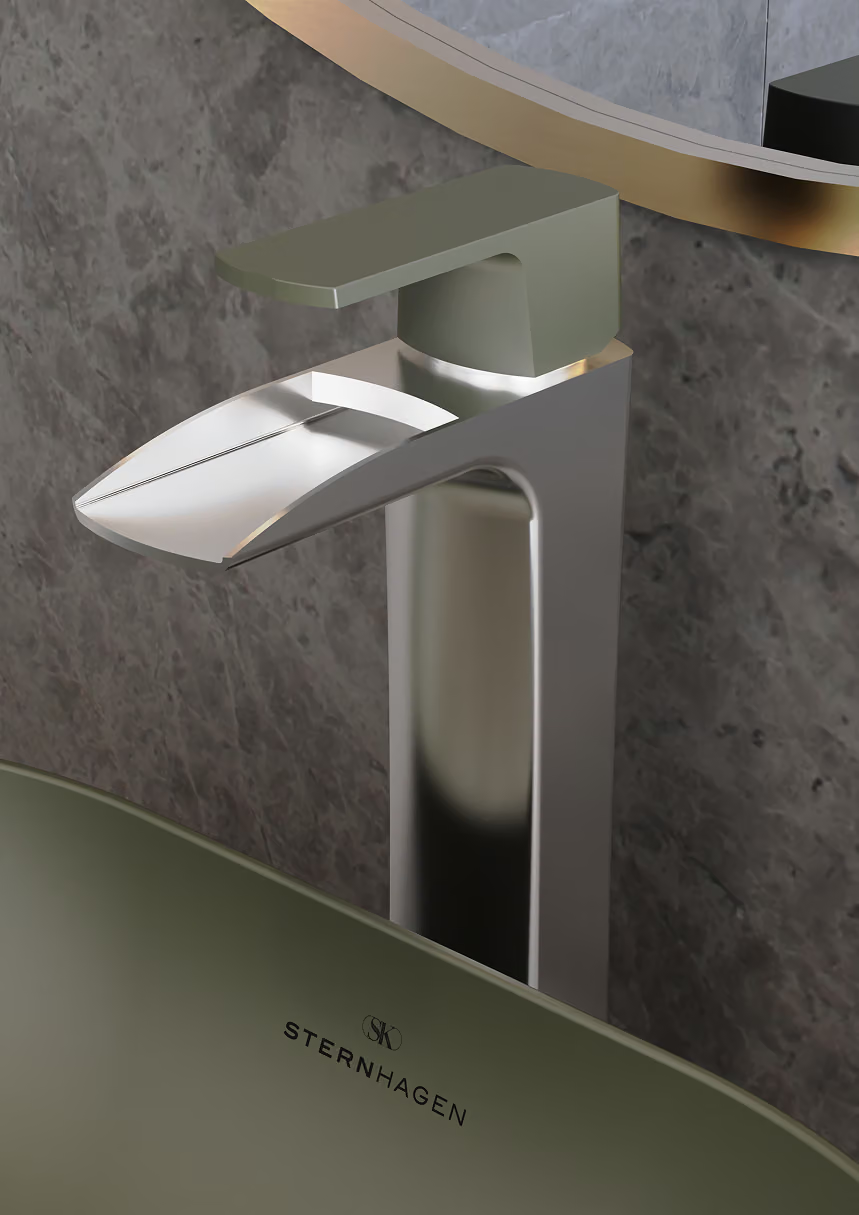
- Wide range of modern designs: from minimal and geometric to sculptural pieces like the cascading SK Waterfall mixer.
- One-handed operation: single-lever models let you adjust flow and temperature with one hand, even with soapy hands.
Disadvantages of Basin Mixer Taps
- Plumbing and pressure requirements: mixers work best when hot and cold supplies are suitably balanced and within the manufacturer's recommended pressure range.
- Higher initial cost on some models: especially tall and wall-mounted designs.
- Servicing over time: the internal cartridge that controls flow and temperature may eventually need cleaning or replacement.
What Are Traditional Basin Taps?
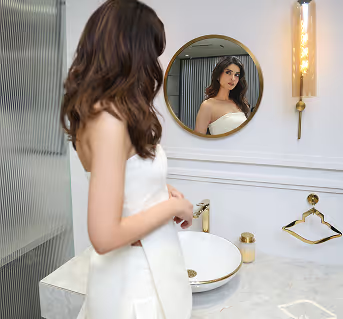
Traditional basin taps are a pair of separate taps, one for hot water and one for cold. They're commonly called pillar taps because each one stands upright on the basin like a small pillar. Each tap has its own outlet and its own control. You'll often find them in older bathrooms and traditional or heritage-style interiors, usually on basins with two tap holes.
Advantages of Traditional Basin Taps
- Simple, familiar operation: turn on hot, turn on cold.
- Suitable for existing two-hole basins: no need to change the basin or cover a hole.
- Classic styles: they suit traditional and period-style bathrooms.
- Independent control: you can draw purely hot or purely cold water whenever you want.
Disadvantages of Traditional Basin Taps
- No mixing before the outlet: hot and cold come out separately, so you get one or the other unless you fill the basin.
- Less convenient for warm water: washing hands or face in warm running water is awkward.
- More to clean: two taps, two handles and two outlets mean more surfaces for water marks and limescale.
Basin Mixer vs Traditional Taps: Which Is Better for Your Bathroom?
For Everyday Convenience
Basin mixers generally make warm-water adjustment much easier, which matters for quick hand washing, shaving and children's routines. Traditional taps give you separate control of hot and cold, which some people prefer, but it takes more effort to get a comfortable temperature.
For Modern and Luxury Bathrooms
Mixers are available in clean, minimalist and sculptural designs, and in finishes such as chrome, matte black, brushed gold and gun grey. Traditional taps can look elegant in classic bathrooms with period details. In both cases, design quality depends on the specific product, not just the tap type. For more on what sets premium fittings apart, see what makes bathroom fittings luxury.
For Installation and Compatibility
- Check the number and position of tap holes in your basin. Most deck-mounted mixers need one hole; pillar taps need two.
- Check your existing hot and cold water connections and where they come out of the wall.
- Check water pressure against the manufacturer's requirements, especially if hot water comes from a geyser and cold from an overhead tank or a pump.
- Wall-mounted mixers need plumbing set into the wall, which may mean extra work in an existing bathroom.
For Cleaning and Maintenance
A single-body mixer usually has fewer external parts to wipe down. Traditional taps have two handles and two outlets. Both need regular cleaning with a soft cloth and mild, non-abrasive cleaner, especially in hard-water areas, and both may need occasional servicing of internal parts.
For Cost and Long-Term Value
Compare the product price, what installation will involve and how easy the tap is to maintain. Your existing plumbing can make a big difference to total cost: switching from pillar taps to a wall-mounted mixer costs more than replacing like for like. A quality mixer is often a worthwhile upgrade, but traditional taps can still be a practical choice.
What to Check Before Buying a Basin Mixer or Tap
- Basin compatibility: the number of tap holes and the mounting position (deck or wall).
- Water pressure: check the manufacturer's recommended operating pressure.
- Spout height and reach: water should land near the centre of the bowl without splashing. Countertop basins usually need a tall mixer like the Danora Tall or a wall-mounted mixer.
- Hot water availability: confirm the bathroom has suitable hot and cold connections.
- Material and finish: look for solid construction such as brass or stainless steel, an even finish and realistic cleaning needs.
- Cartridge and warranty: check whether the cartridge is serviceable and whether replacement parts are available.
Which Should You Choose: Basin Mixer or Basin Tap?
Choose a basin mixer if:
- You want convenient mixed-temperature water.
- You prefer a modern, streamlined appearance.
- You're installing a new basin or renovating the bathroom.
- Your plumbing and basin are compatible.
Choose traditional separate taps if:
- You prefer a classic bathroom design.
- Your existing basin has two tap holes.
- You want independent hot and cold outlets.
- You don't need mixed water from one spout.
For most modern bathrooms, a basin mixer is the more convenient everyday choice. But if your bathroom is classic in style or you're keeping a two-hole basin, traditional taps remain a sensible option.
Explore Basin Mixers and Faucets by Sternhagen
Sternhagen's basin mixers are designed to pair with its countertop basins. The An Ode to Germany range includes the brass Danora and Rhine mixers in standard, tall and wall-mounted versions, finished in Chrome Plated, Black Matt, Brushed Gold or Gun Grey. Other options include the Golden Cut mixer in black, chrome or rose gold, and the SK Waterfall mixer from Creare by Sussanne Khan. Pair them with countertop basins, and read our guides to countertop vs wall-mounted basins and the types of wash basins.
FAQs
1. What is the difference between a basin mixer and a basin tap?
A basin mixer blends hot and cold water inside its body and delivers it through one spout. Traditional basin taps, or pillar taps, are two separate taps, one for hot and one for cold, each with its own outlet. Technically, a mixer is also a type of basin tap.
2. Is a basin mixer better than separate taps?
For most modern bathrooms, a mixer is more convenient because you can set a comfortable temperature from one spout. Separate taps still suit classic bathrooms and existing two-hole basins. Neither is better in every situation.
3. Can I replace two basin taps with a mixer tap?
Yes, usually. You can fit a two-hole mixer, cover the unused hole with a blanking plate or deck plate, or replace the basin with a one-hole model. A wall-mounted mixer is another option if you can run the plumbing in the wall.
4. Do basin mixer taps need both hot and cold water connections?
A mixer is designed for both, but it can work with a cold supply only; you'll just get cold water. For the mixer to blend temperatures properly, both supplies should be within the manufacturer's recommended pressure range.
5. Which tap is best for a countertop wash basin?
A tall basin mixer or a wall-mounted mixer. A standard short tap usually can't reach over the rim of a countertop basin. Check that the spout reaches the centre of the bowl.
6. Are basin mixer taps easy to maintain?
Generally, yes. Wipe them regularly with a soft cloth and mild cleaner, clean the aerator if the flow weakens, and expect to service or replace the cartridge eventually. Choosing a model with available spare parts makes this easier.