If you're planning a new bathroom or renovating an old one, the choice often narrows to two options: a basin that sits on a counter, or one that hangs on the wall. Both look modern, both work in small and large bathrooms, and both can feel premium. The right answer depends on your space, storage needs, plumbing and the look you want, not on which type is "better" in general.
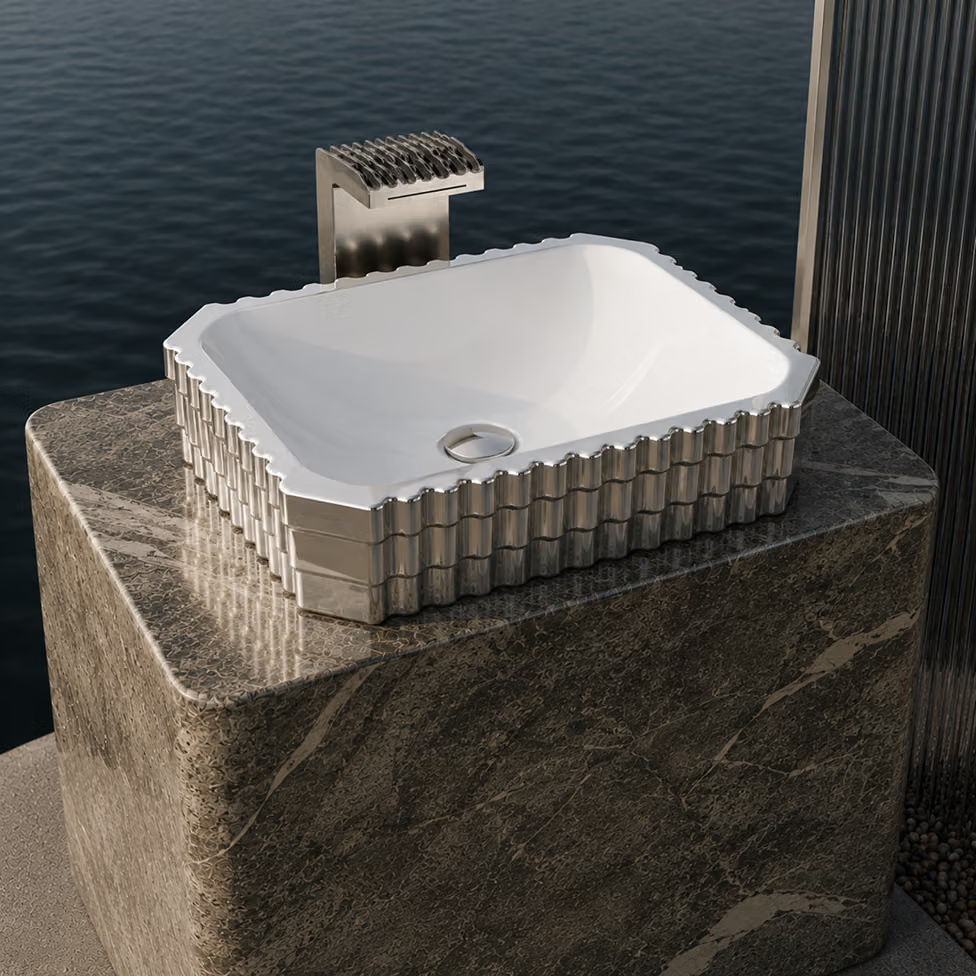
This guide compares the countertop vs wall-mounted basin decision point by point, so you can choose with confidence.
Countertop vs Wall-Mounted Basin: Key Differences
Countertop and wall-mounted basins are two of the most popular choices in modern bathrooms, but they work in very different ways. One relies on a counter or vanity for support; the other relies on the wall. That single difference affects installation, space, storage, appearance, cleaning and even which tap you can use. Here's how they compare at a glance.
| Feature | Countertop Basin | Wall-Mounted Basin |
|---|---|---|
| Installation | Sits on a countertop or vanity | Fixed to a suitable wall/support |
| Appearance | Often creates a statement look | Clean, minimalist appearance |
| Space | Requires countertop space | Can save floor space |
| Storage | Can be paired with vanity storage | Usually has no built-in storage |
| Cleaning | Requires cleaning around the basin base | Open floor space is easier to access |
| Faucet | Often needs a tall or wall-mounted tap | May use deck-mounted or wall-mounted taps |
| Best For | Vanity bathrooms and design-focused spaces | Compact and minimalist bathrooms |
What Is a Countertop Wash Basin?
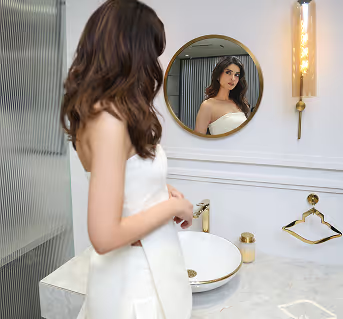
A countertop wash basin (also called a tabletop or vessel basin) sits on top of a countertop, vanity unit or sturdy shelf, with only the waste outlet passing through the surface. It comes in a wide range of shapes, materials and designs, which is why it's so common in modern and luxury bathrooms. It needs a suitable counter, a planned drain position and a compatible faucet. For how it compares with other formats, see our guide to types of wash basins.
Advantages of Countertop Basins
- Wide range of design choices: round, oval, rectangular, faceted and sculptural shapes in ceramic, quartz, stone and metal, such as the Sani Quartz Kristall basin or the stainless steel Inox Series.
- Can create a focal point: because the whole basin is visible, it can anchor the bathroom's design.
- Works well with vanity storage: the counter below can hide cabinets and drawers, as well as the trap and pipes.
- Flexible combinations: you can pair different basins with stone, quartz, wood or other counter surfaces.
Disadvantages of Countertop Basins
- Requires countertop space: you need a counter or vanity deep and wide enough to hold the basin with room to spare.
- Can raise the overall height: the basin sits on top of the counter, so the counter must be planned lower to keep a comfortable rim height.
- Water may collect around the base: the joint where basin meets counter needs regular wiping.
- Faucet choice matters: a standard short tap usually won't clear the rim, so tap height and spout reach must be chosen carefully.
What Is a Wall-Mounted Wash Basin?
A wall-mounted (or wall-hung) wash basin is fixed directly to the wall using brackets, bolts or a concealed support frame. It doesn't necessarily need a vanity or countertop, though it can be paired with a wall-hung cabinet. It's common in compact and minimalist bathrooms, and it needs a wall with adequate strength and proper installation.
Advantages of Wall-Mounted Basins
- Makes smaller bathrooms feel more open: with nothing below the basin, more of the floor is visible.
- Keeps floor space clear: easier to move around and to mop underneath.
- Simple, uncluttered appearance: suits minimalist and contemporary interiors.
- Flexible installation height: it can be set at a height that suits the household, within the product's and installer's requirements.
Disadvantages of Wall-Mounted Basins
- Little or no storage: you'll usually need separate cabinets or shelves.
- Visible plumbing: the trap and pipes show unless they're concealed or you choose a decorative bottle trap.
- Needs suitable wall support: hollow or weak walls may need reinforcement or a frame.
- Fewer design options: basin size, weight and mounting systems can limit shapes and materials.
Countertop vs Wall-Mounted Basin: Which Is Better for Your Bathroom?
For Small Bathrooms
Wall-mounted basins are often the practical choice, because they don't need a full vanity and keep the floor open. But a compact countertop basin on a narrow vanity or wall-hung shelf can also work well. In a small bathroom, the actual basin width, projection from the wall and clearance in front matter more than the type itself.
For Luxury and Modern Bathrooms
Countertop basins are a natural fit when you want a statement piece. A textured design like the SK Shell or the horseshoe-shaped Shü basin becomes the room's focal point. Wall-mounted basins suit minimalist, floating designs where clean lines matter most. Neither is automatically more luxurious; materials, finish and how well the basin fits the room decide that.
For Storage and Everyday Convenience
Countertop basins pair easily with cabinets and drawers, and leave counter space for daily essentials. Wall-mounted basins leave more open space but may need a separate cabinet, mirror cabinet or shelves. Think about where toiletries, towels and cleaning products will go, and how many people share the bathroom each morning.
For Cleaning and Maintenance
Countertop basins need cleaning around the base and across the counter, especially where water collects at the joint. Wall-mounted basins make the floor underneath easy to reach, though the visible pipes and wall below need wiping too. Both types need regular cleaning with mild, non-abrasive cleaners to stay in good condition, particularly in areas with hard water.
For Installation and Cost
A countertop installation involves the basin, the countertop or vanity, and a suitable tap arrangement. A wall-mounted installation needs appropriate wall support, correctly positioned plumbing and, often, a concealed or decorative trap. Neither is always cheaper or simpler: total cost depends on the products, materials, existing plumbing and how much building work is needed.
Important Things to Check Before Buying
- Available space: measure the basin's width and depth, and the clearance around it.
- Basin height: check the final rim height. A finished height of around 800–850 mm from the floor is a common guide; with countertop basins, add the basin's own height to the counter.
- Faucet compatibility: match tap height, spout reach and mounting type to the basin.
- Plumbing: plan the drain position, choose a suitable bottle trap and decide how visible the pipes will be.
- Wall or countertop support: make sure the wall or counter can safely carry the basin.
- Daily use: think about splashing, storage needs and how easy the setup will be to clean.
Matching the Tap to the Basin
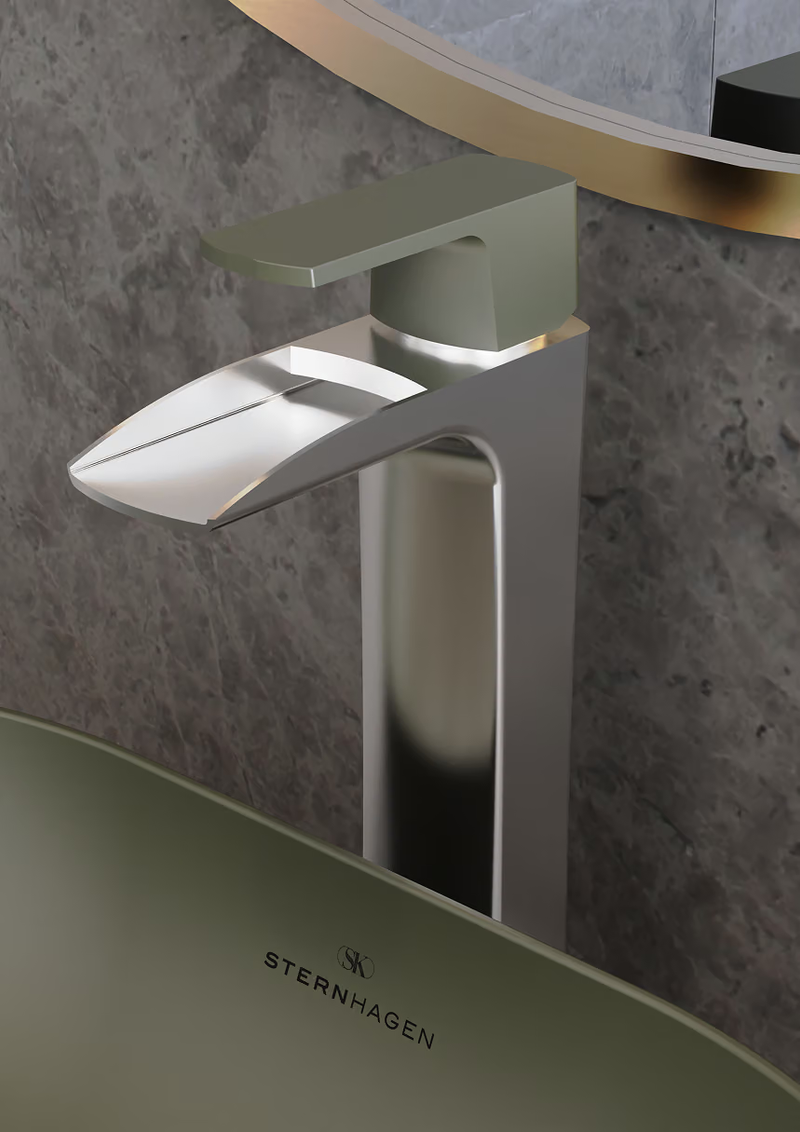
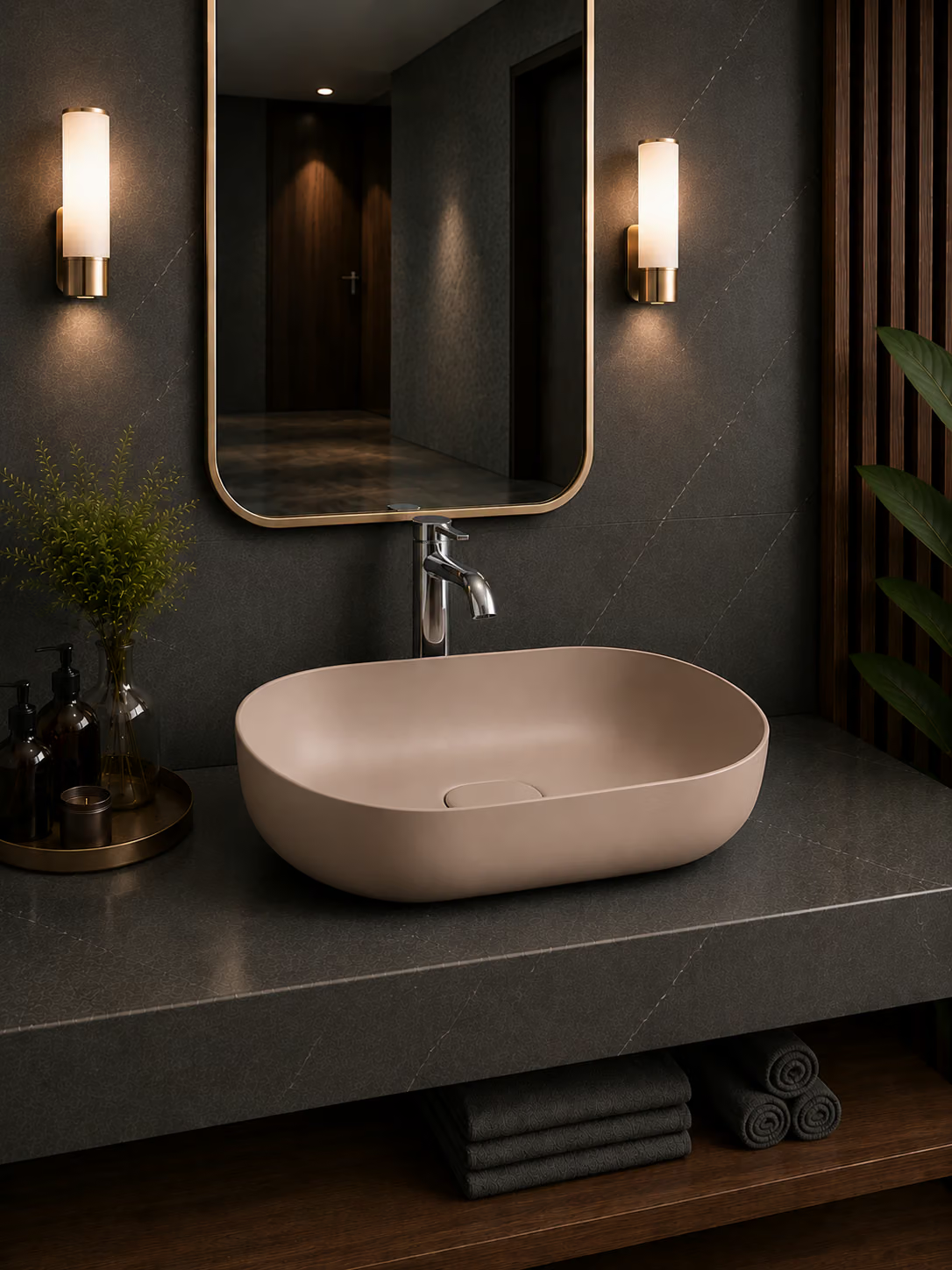
For a countertop basin, choose a tall basin mixer such as the Danora Tall or Elbe Tall, or a wall-mounted mixer like the Rhine Wall Mounted Basin Mixer. For a wall-mounted basin with a tap hole, a standard deck-mounted mixer such as the Elbe works well; without one, use a wall-mounted mixer. Whichever you choose, check the spout reaches the centre of the bowl. Browse all basin mixers.
Which Basin Should You Choose?
Choose a countertop basin if:
- You want a decorative or statement basin.
- You're planning a vanity with storage.
- You have enough countertop space.
- You prefer a wider range of basin shapes and materials.
Choose a wall-mounted basin if:
- You want to keep floor space open.
- Your bathroom is compact.
- You prefer a minimalist appearance.
- You don't need a full vanity beneath the basin.
Both can work beautifully in a luxury bathroom. What matters is planning the dimensions, installation and design together, so the basin, tap, vanity and plumbing all suit the space.
Explore Modern Wash Basins by Sternhagen
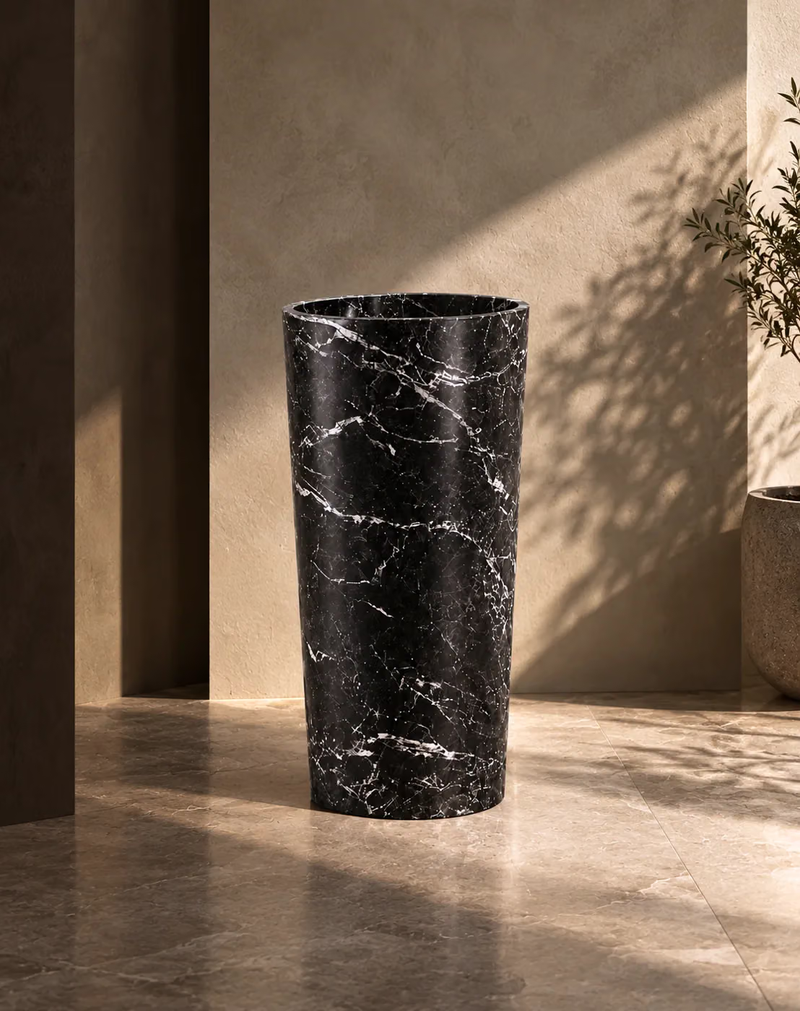
Sternhagen's wash basin range focuses on countertop and statement designs: faceted Sani Quartz basins in the Kristall Suite, stainless steel basins in the Inox Series, designer pieces from Creare by Sussanne Khan, and marble basins from An Ode to Germany. Pair them with matching basin mixers and bathroom accessories, or find a dealer to see them in person.
FAQs
1. Which is better, a countertop basin or a wall-mounted basin?
Neither is better in every case. A countertop basin suits bathrooms with vanity space where you want a statement look and storage. A wall-mounted basin suits compact or minimalist bathrooms where open floor space matters more than storage.
2. Are countertop basins suitable for small bathrooms?
Yes, if you choose a compact basin and a narrow vanity or wall-hung shelf. Measure the counter depth and the clearance in front of the basin carefully, since the basin and counter together take up more room than a wall-mounted basin alone.
3. Do wall-mounted basins need special wall support?
They need a wall that can safely carry the basin's weight plus everyday pressure from leaning on it. Solid masonry walls usually work with the right fixings; hollow or lightweight partition walls may need reinforcement or a concealed support frame. Follow the manufacturer's installation instructions.
4. Are countertop basins harder to clean?
They need a little more attention around the base, where water and grime collect at the joint with the counter. The basin itself is usually easy to clean, and the counter keeps plumbing out of sight.
5. Which basin is better for a bathroom with storage?
A countertop basin is the easier option, because it sits on a vanity unit that can include cabinets and drawers. A wall-mounted basin can still be paired with a wall-hung cabinet or separate storage.
6. Can a wall-mounted basin be installed at any height?
It can be installed at a range of heights, which is useful for households with children, taller users or accessibility needs. The final height still depends on the product's design, the wall structure and the plumbing positions, so confirm it with your installer.