Pick the wrong basin mixer and you'll notice it every day: water splashing over the rim, a spout that barely reaches the bowl, a lever that knocks the mirror, or a tap that simply looks out of place on your basin. Most of these problems come from choosing a mixer by looks alone, without matching its type to the basin and the plumbing behind it.
This guide explains the main types of basin mixers, how they overlap, which ones suit which wash basins, and what to check before you buy.
What Is a Basin Mixer?
A basin mixer is a tap that combines hot and cold water and delivers it through a common outlet, so you can set the temperature you want from one spout.
Different mixer designs suit different basins, bathroom layouts and user preferences. The easiest way to understand them is to classify them in three ways:
- By control style: single-lever, dual-handle or sensor.
- By mounting type: deck-mounted or wall-mounted.
- By spout height: standard or tall.
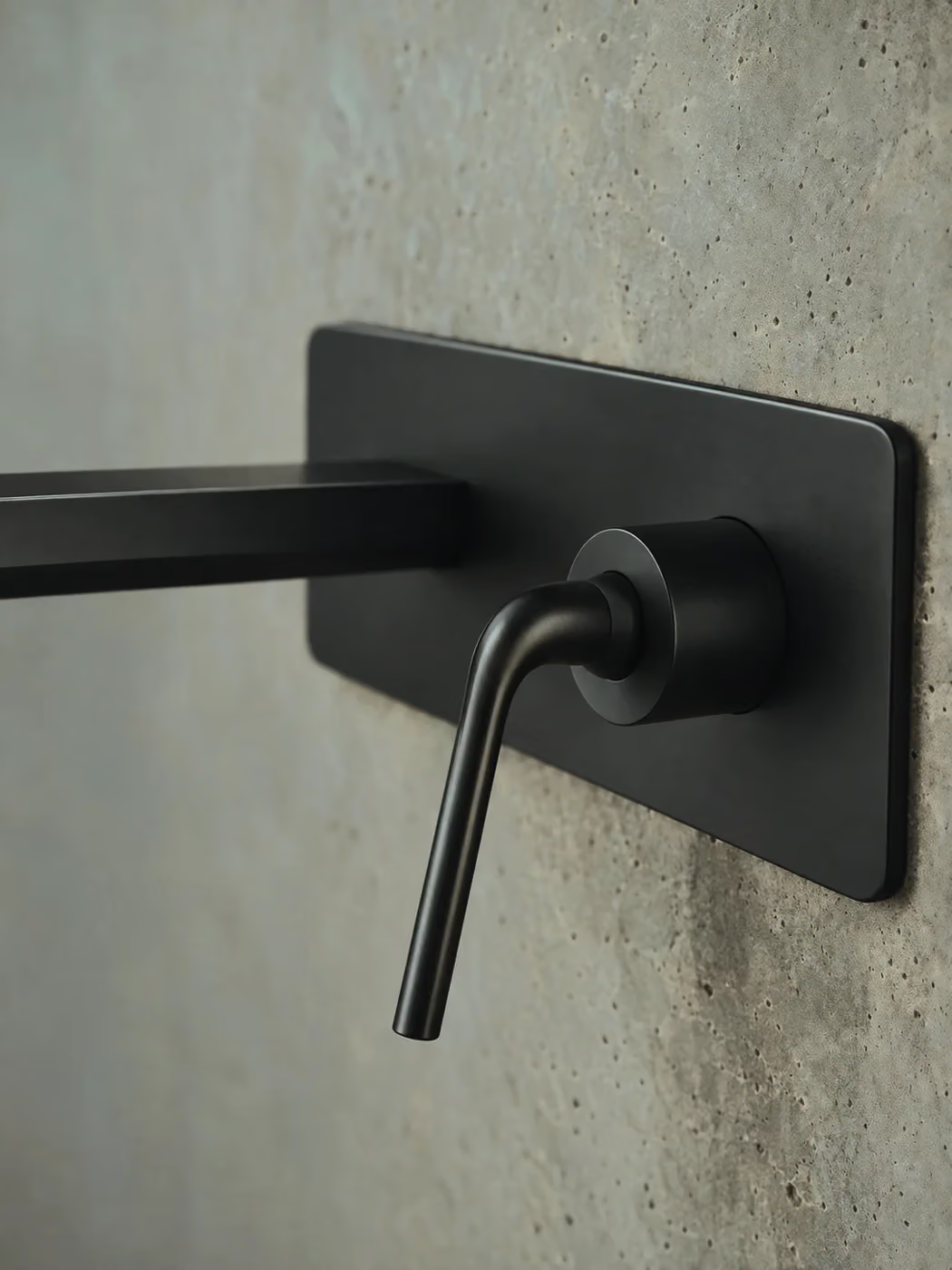
Different Types of Basin Mixers
These categories overlap. Every mixer has a control style, a mounting type and a height. A tall mixer, for example, is usually also single-lever and deck-mounted. So rather than six separate products, think of the types below as features you combine to suit your basin.
1. Single-Lever Basin Mixer
A single lever controls both flow and temperature: lift it to adjust flow, move it left or right to adjust temperature. It's the most common control style in modern bathrooms because it's quick and intuitive, and you can operate it with one hand, even with wet or soapy hands.
Single-lever mixers come in every height and mounting style, from compact deck mixers to tall and wall-mounted versions. The Pent basin mixer, for example, is a tall, single-lever brass mixer, and the Shü basin comes with a matching champagne gold single-lever faucet.
Limitations: check the lever's movement against nearby walls, mirrors or shelves, especially in compact bathrooms.
2. Dual-Handle Basin Mixer
A dual-handle mixer has separate handles for hot and cold water, but unlike traditional pillar taps, the water mixes inside the body and flows from a common spout. It's often chosen for traditional or classic bathroom designs, where a pair of symmetrical handles suits the look.
Limitations: adjusting the temperature takes two hands and a little more trial and error. Depending on the design, dual-handle mixers may also take up more space on the basin or counter, and some need more than one tap hole.
3. Tall Basin Mixer
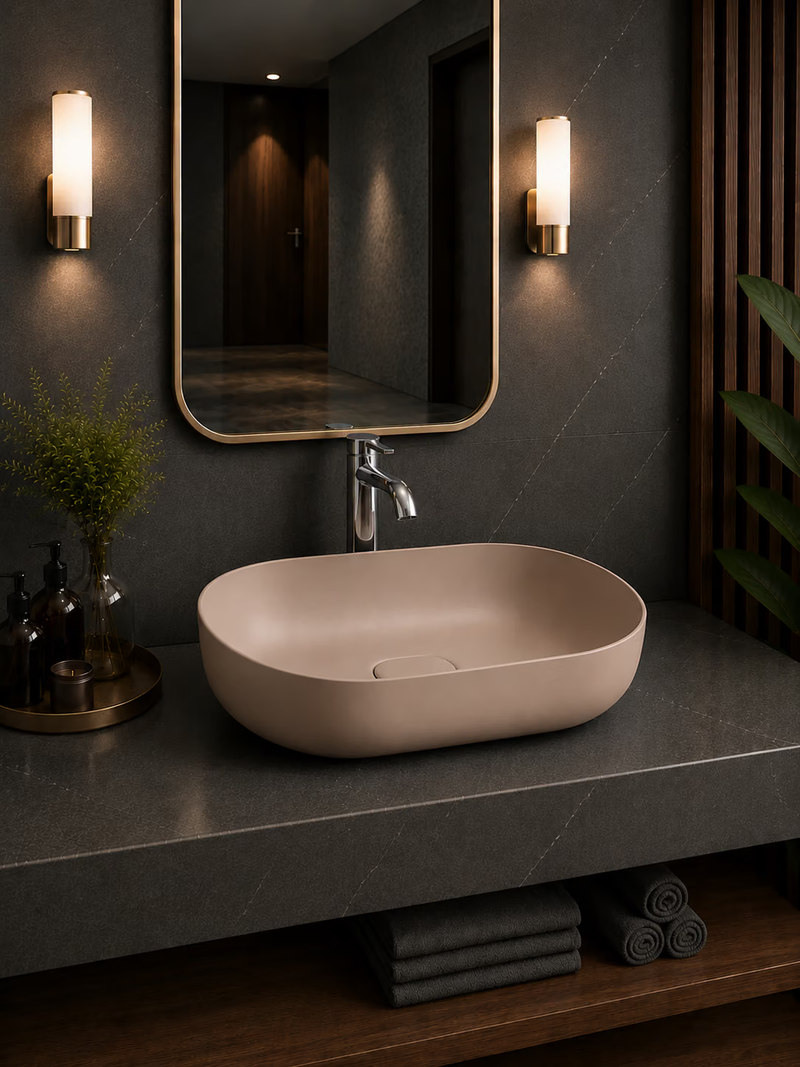
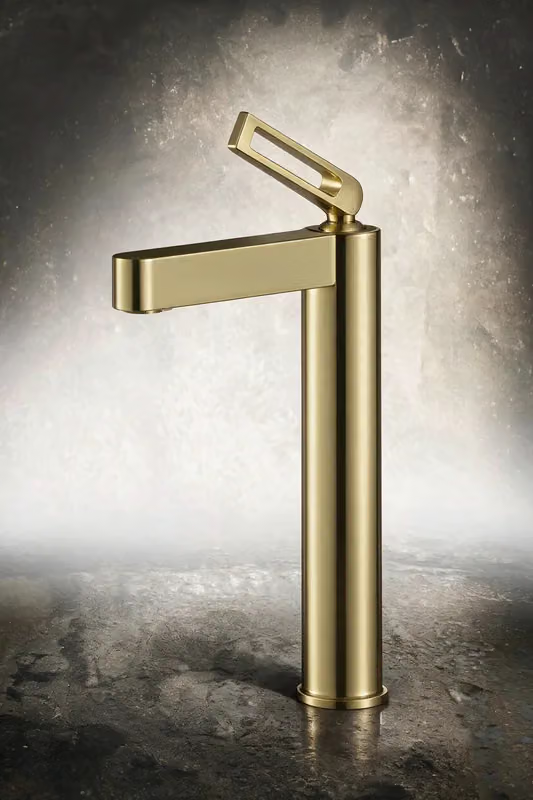
A tall basin mixer has a raised body and spout so the water clears the rim of a countertop basin. It's popular in contemporary bathrooms, where countertop basins are the norm, and it often becomes a visual feature alongside the basin. Options include the Danora Tall, Rhine Tall and Elbe Tall mixers, as well as the Pent.
Limitations: spout height and reach have to match the basin. Too low and the spout sits close to the rim; too high and water splashes as it drops into the bowl.
4. Wall-Mounted Basin Mixer
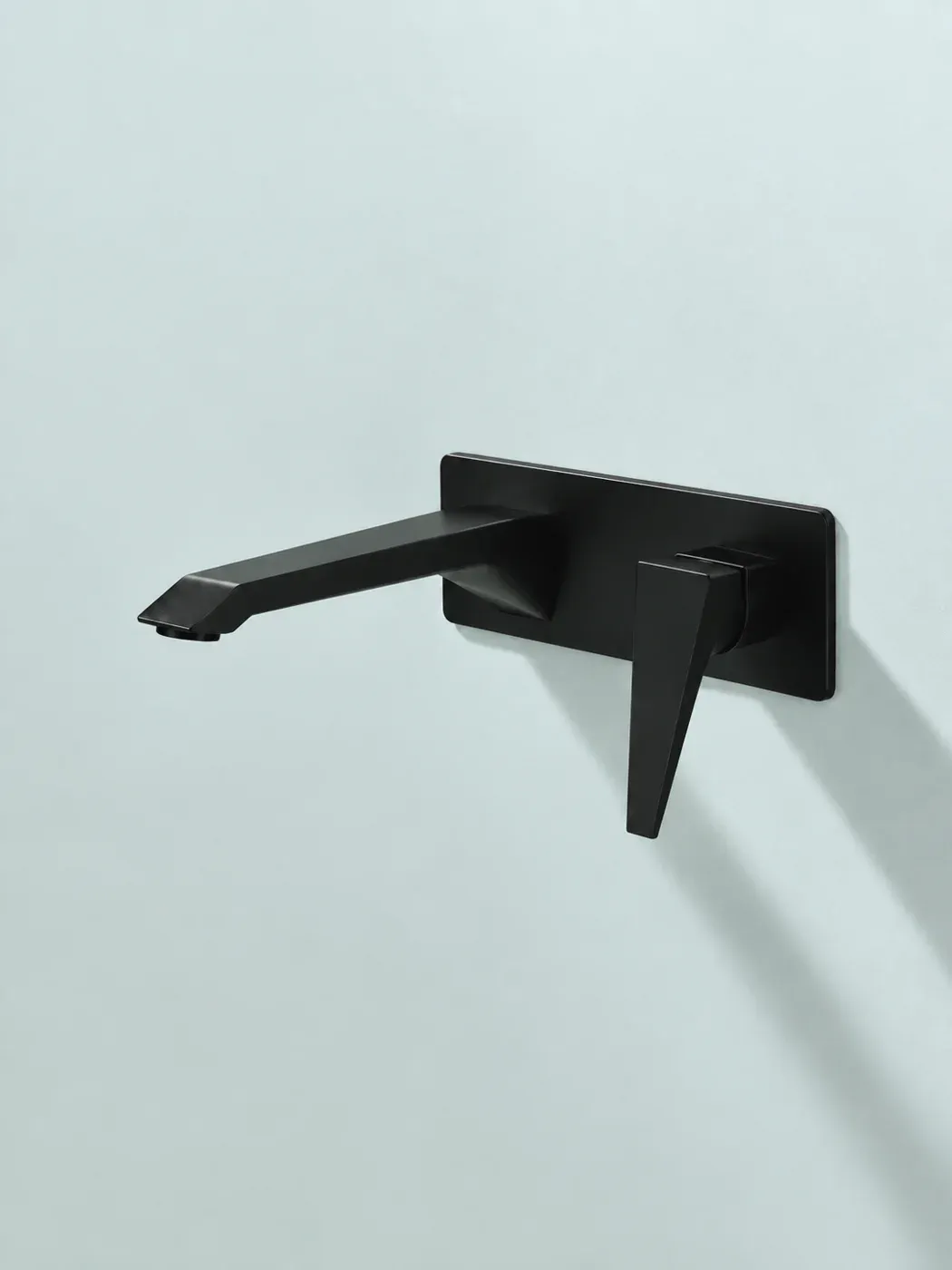
A wall-mounted mixer is installed on the wall above the basin, with the spout projecting over the bowl and the valve body concealed in the wall. It keeps the countertop clear, which makes cleaning easier and suits minimalist bathrooms. Wall-mounted mixers work well with countertop basins and with other basins that have no tap hole. Sternhagen's wall-mounted options include the Danora, Rhine and Elbe wall-mounted mixers.
Limitations: the plumbing must be planned into the wall at the right height and position, ideally before tiling. Adding one to an existing bathroom usually means opening the wall.
5. Deck-Mounted Basin Mixer
A deck-mounted mixer is installed directly on the basin or countertop, through a tap hole. It's available in single-lever and dual-handle designs, in both standard and tall heights, which makes it the most common choice for standard basin installations. The Danora, Rhine and Elbe basin mixers, the faceted Golden Cut and the cascading SK Waterfall are all deck-mounted designs.
Limitations: the basin or counter needs a compatible tap hole and enough space around it for the mixer's base and lever.
6. Sensor Basin Mixer
A sensor mixer turns the water on and off automatically when it detects hands beneath the spout. Touch-free operation is useful for hygiene, which is why sensor mixers are common in offices, malls and other commercial bathrooms, though residential models are also available.
Limitations: sensor mixers need batteries or an electrical connection. Temperature control also varies: some have a separate lever or a pre-set temperature, while others deliver water at one fixed setting, so check how it works on the model you're considering.
Basin Mixer Types Compared
| Basin Mixer Type | Main Feature | Best For |
|---|---|---|
| Single-Lever | One-handle operation | Everyday convenience |
| Dual-Handle | Separate temperature controls | Classic bathroom designs |
| Tall Mixer | Elevated spout | Countertop basins |
| Wall-Mounted | Wall installation | Minimalist bathrooms |
| Deck-Mounted | Basin/counter installation | Standard basin setups |
| Sensor Mixer | Touch-free operation | Hygiene-focused spaces |
Remember that you'll usually combine types: a tall, single-lever, deck-mounted mixer for a countertop basin, or a single-lever, wall-mounted mixer for a clean, minimalist vanity.
Which Basin Mixer Works Best with Different Wash Basins?
The right mixer depends more on your basin than on anything else. For a full overview of basins, see our guide to the types of wash basins.
For Countertop Wash Basins
Choose a tall basin mixer or a properly positioned wall-mounted mixer. A standard deck mixer usually won't clear the rim of a countertop basin. Consider the basin's height, the spout's reach to the centre of the bowl, and how far the water falls, which affects splashing. Basins such as the Kristall or SK Shell pair naturally with tall or wall-mounted mixers.
For Wall-Mounted Wash Basins
Many wall-mounted basins have a tap hole on the basin deck, so a compatible standard deck-mounted mixer works well. If the basin has no tap hole, use a wall-mounted mixer instead. Check the available tap holes, the depth of the deck and the mounting arrangement before buying.
For Under-Counter and Inset Basins
Standard-height deck-mounted mixers are often suitable, fitted through the countertop or the basin deck. Consider the countertop's thickness, since the mixer's mounting shank must be long enough to pass through it, as well as tap placement and spout reach. A wall-mounted mixer is also an option if you want the counter completely clear.
Important Features to Look for in a Basin Mixer
- Material: a solid body resists corrosion and wear. Brass is the most common choice for premium mixers, and some models use stainless steel, such as the SS304 Elbe wall-mounted mixer.
- Cartridge: the cartridge controls flow and temperature. Look for smooth, consistent operation and check that it can be serviced or replaced.
- Finish: chrome, brushed finishes, black or other options. An even finish lasts longer and is easier to keep clean. The An Ode to Germany mixers, for example, come in Chrome Plated, Black Matt, Brushed Gold and Gun Grey.
- Water pressure compatibility: check the manufacturer's operating pressure range against your home's supply.
- Water efficiency: look for aerators or other flow-control features where available.
- Maintenance: consider how easy the mixer is to clean, especially in hard-water areas, and whether replacement parts are available.
How to Choose the Right Basin Mixer for Your Bathroom
- Check your wash basin type and tap-hole configuration. This decides whether you need a deck-mounted or wall-mounted mixer, and whether it must be tall.
- Choose the right mounting style. Deck-mounted is simpler to install or replace; wall-mounted needs plumbing in the wall.
- Measure the required spout height and reach. The water should land near the centre of the bowl.
- Check plumbing and water pressure compatibility. Confirm hot and cold supply positions and pressure, especially if hot water comes from a geyser and cold from an overhead tank or pump.
- Select a finish that complements the bathroom. Match it to other fittings and accessories. For more on finish quality, see what makes bathroom fittings luxury.
- Consider warranty, installation and long-term maintenance. Professional installation and access to spare parts make a real difference over the years.
Explore Basin Mixers by Sternhagen
Sternhagen's basin mixer range includes deck-mounted, tall and wall-mounted designs. The An Ode to Germany collection offers the Danora, Rhine and Elbe mixers in standard, tall and wall-mounted versions, finished in Chrome Plated, Black Matt, Brushed Gold or Gun Grey. Statement options include the Golden Cut mixer in black, chrome or rose gold, the tall single-lever Pent mixer from the Pent Suite, and the SK Waterfall mixer from Creare by Sussanne Khan. Pair them with Sternhagen's wash basins, or find a dealer to see them in person.
FAQs
1. What are the different types of basin mixers?
Basin mixers can be grouped by control style (single-lever, dual-handle or sensor), mounting type (deck-mounted or wall-mounted) and height (standard or tall). Most mixers combine one of each, such as a tall, single-lever, deck-mounted mixer.
2. Which basin mixer is best for a countertop basin?
A tall basin mixer or a wall-mounted mixer. Both let the water clear the rim of a countertop basin. Check that the spout reaches the centre of the bowl and isn't so high that the water splashes.
3. What is the difference between a tall and standard basin mixer?
A tall mixer has a raised body and spout designed for countertop basins that sit above the counter. A standard mixer is shorter and suits basins where the bowl is at or below the counter level, such as under-counter, inset and many wall-mounted basins.
4. Is a wall-mounted basin mixer better than a deck-mounted mixer?
Neither is better in every case. A wall-mounted mixer keeps the counter clear and looks minimal, but needs plumbing in the wall. A deck-mounted mixer is simpler to install and replace, and suits most basins with a tap hole.
5. Can any basin mixer be installed on any wash basin?
No. The mixer has to match the basin's tap-hole configuration, height and shape. A countertop basin usually needs a tall or wall-mounted mixer, while a basin with a tap hole needs a deck-mounted mixer that fits it.
6. What should I check before buying a basin mixer?
Check your basin type and tap holes, the mounting style, spout height and reach, plumbing positions and water pressure, the material, cartridge and finish, and the warranty and availability of spare parts.