By Sternhagen Editorial Team
Weighing up glass basin pros and cons? A glass wash basin offers a striking look, many colours and finishes, and a smooth, non-porous surface. Its drawbacks are visible water spots, the risk of chips or breakage from impacts, and the need for regular, gentle cleaning. Here are the advantages and disadvantages to weigh before you buy.
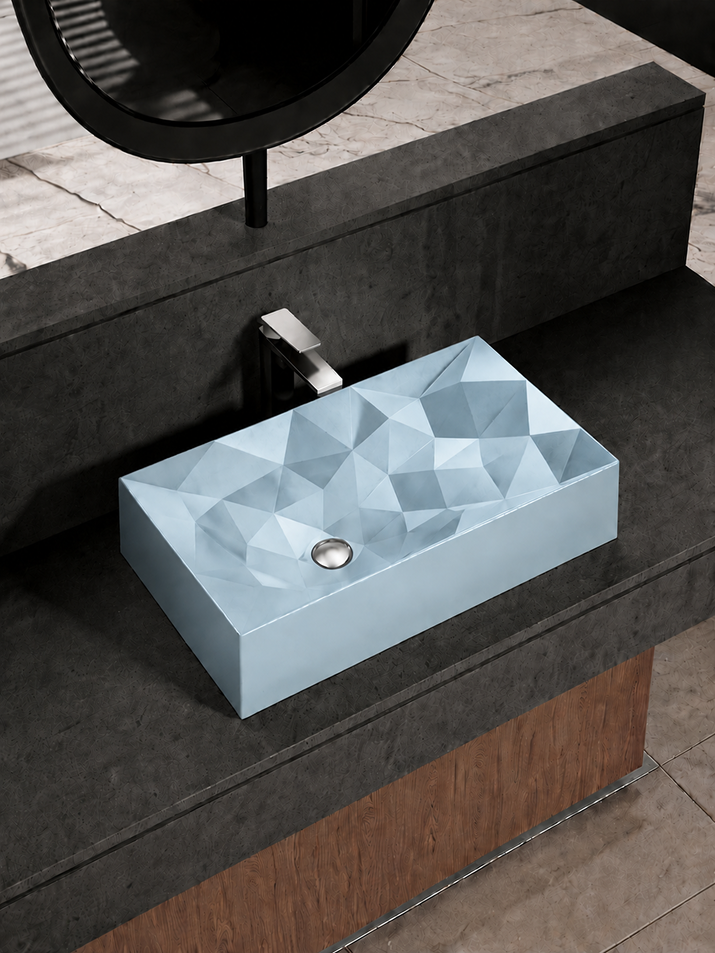
Ice blue Sternhagen Kristall faceted countertop basin with a crystal-inspired design on a dark stone vanity.
What Is a Glass Wash Basin?
A glass wash basin is a bathroom sink made from glass, usually designed for countertop installation. Many models use tempered glass, which is heat-treated for greater strength and safety than ordinary glass. Glass basins come in clear, frosted, coloured, textured and decorative finishes and are often chosen for modern bathrooms and statement vanities.
Advantages of Glass Wash Basins
1. Modern and Attractive Appearance
Glass reflects light in a way ceramic and stone don’t, so a glass basin can become the focal point of the bathroom.
2. Variety of Designs
Clear, frosted, coloured and textured glass comes in round, oval, square and other shapes to suit different styles.
3. Smooth, Non-Porous Surface
Glass doesn’t absorb water like porous materials, and its smooth surface is easy to wipe. Regular cleaning is still needed to prevent deposits.
4. Suitable for Contemporary Bathroom Designs
Glass pairs well with stone, wood and modern vanity tops. Because most glass basins have no tap hole, they work with an appropriately sized tall or wall-mounted basin mixer.
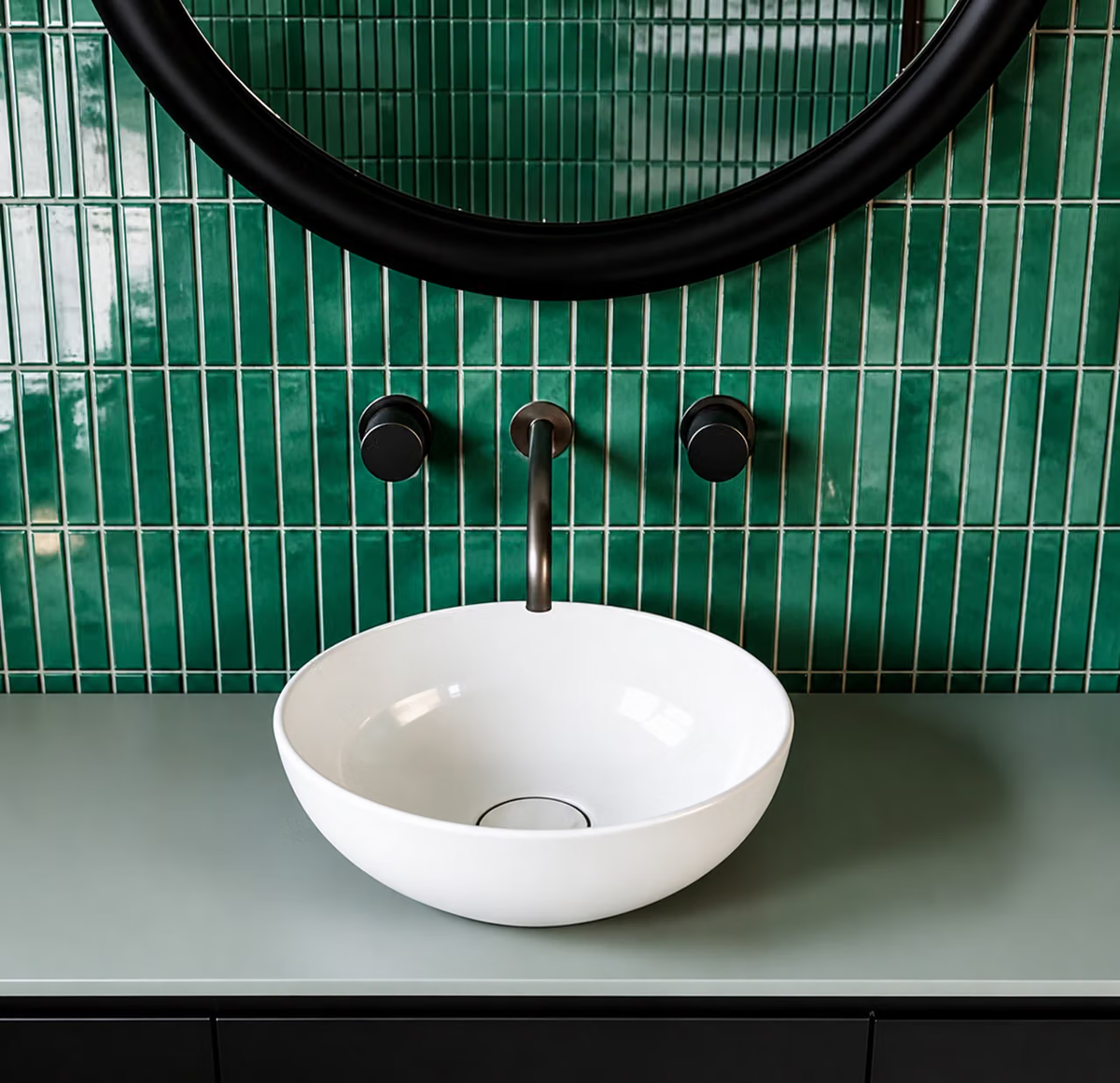
White round countertop basin on a sage green counter with a matte black wall-mounted basin mixer.
5. Good Resistance to Everyday Moisture
Glass doesn’t rust, and bathroom glass basins are designed for wet use. Proper installation and care remain important.
Disadvantages of Glass Wash Basins
1. Water Spots and Soap Marks Are More Visible
Droplets, soap residue and fingerprints show clearly, especially on clear and dark glass. Hard water leaves mineral spots.
2. Risk of Chips, Scratches, or Breakage
Tempered glass is stronger than ordinary glass but not unbreakable. Impacts, abrasive cleaning or sudden temperature shocks can damage it, and a cracked basin usually needs replacing.
3. Requires Regular Cleaning
Frequent wiping keeps it looking clear. Avoid abrasive pads and harsh chemicals, and follow the manufacturer’s instructions.
4. Installation Requires Care
A glass basin needs suitable mounting hardware, usually a mounting ring with seals, and a level countertop. As most have no overflow, they need a non-overflow (unslotted) pop-up waste. Over-tightening fittings can crack the glass, and the faucet must suit the basin.
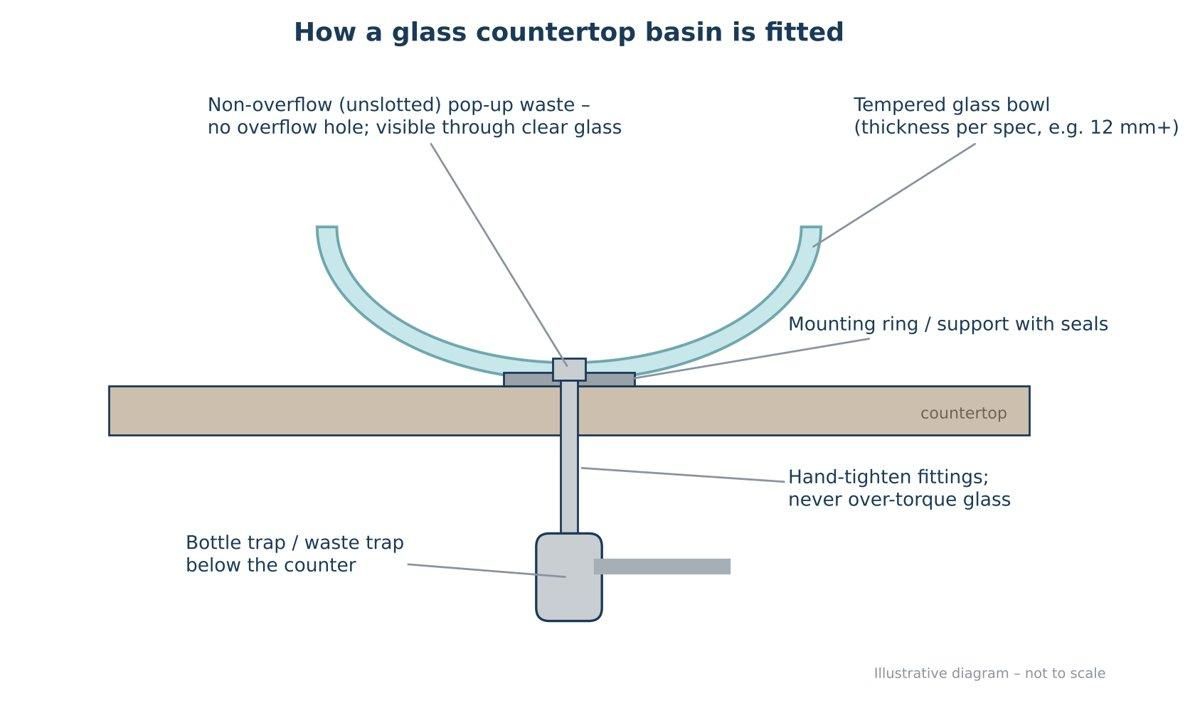
Diagram of a glass countertop basin installation showing the tempered glass bowl, mounting ring with seals, non-overflow pop-up waste and bottle trap below the counter.
5. May Not Suit Every Bathroom
Decorative glass may not match every interior, and it can be less practical in busy family bathrooms. Check depth, shape and splash control.
Glass Wash Basin Pros and Cons at a Glance
| Pros | Cons |
|---|---|
| Distinctive modern appearance | Water spots can be noticeable |
| Available in various colours and designs | Can chip or break under impact |
| Smooth, non-porous surface | Requires regular cleaning |
| Works with modern vanity designs | Needs careful installation |
| Resistant to everyday moisture | Not ideal for every bathroom layout |
Glass vs Ceramic Wash Basin: Which Is Better?
| Feature | Glass Basin | Ceramic Basin |
|---|---|---|
| Appearance | Often decorative or transparent | Commonly classic or minimalist |
| Design options | Clear, coloured, frosted, textured | Various shapes, colours and finishes |
| Durability | Can be vulnerable to impact damage | Can also chip or crack under impact |
| Cleaning | Water spots may be more visible | Glazed surfaces are generally easy to clean |
| Maintenance | Needs gentle cleaning | Usually straightforward routine cleaning |
| Best for | Statement vanity designs | Everyday and versatile bathroom designs |
Neither is always better: real performance depends on product quality, construction and use. See our guide to the types of wash basins for other materials.
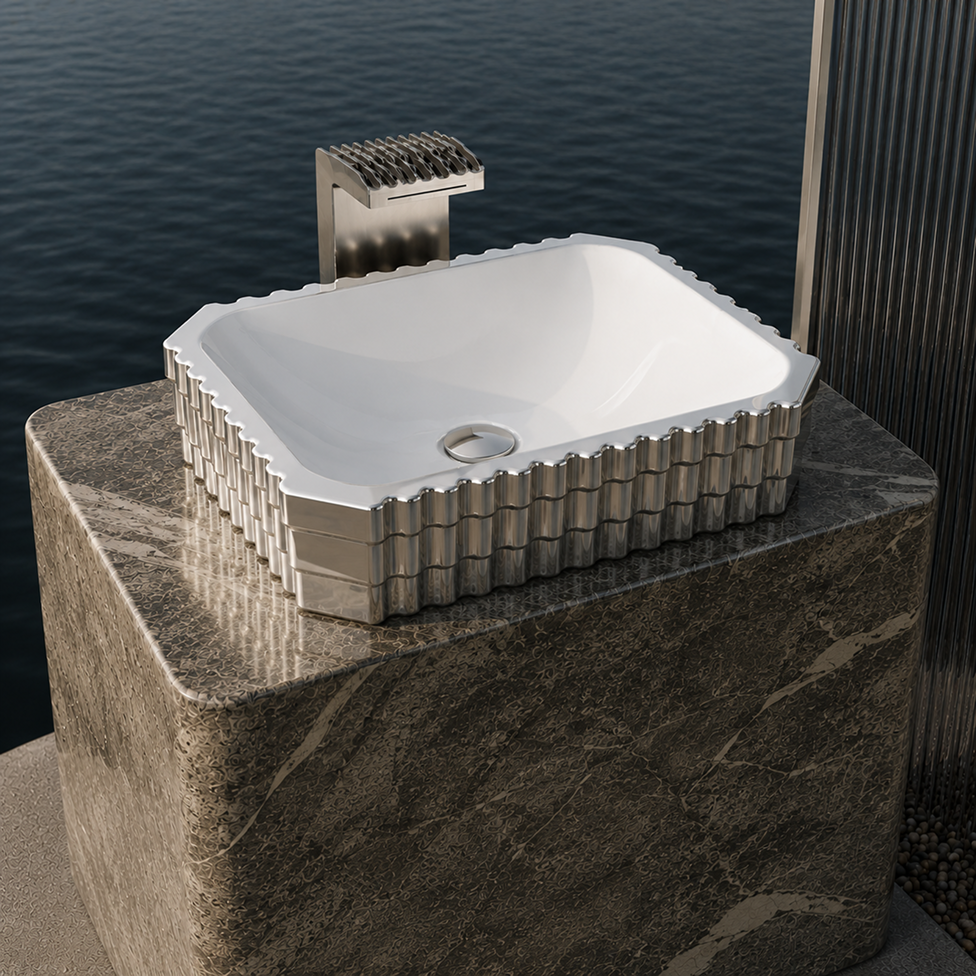
Sternhagen Shin ceramic countertop basin with a fluted silver exterior on a stone block.
Are Glass Wash Basins Durable?
A good-quality, correctly installed glass basin can handle normal daily use, but durability depends on:
- Ordinary vs tempered glass: tempered glass is much stronger and breaks into small blunt pieces rather than sharp shards – safer, but not shatterproof.
- Thickness and quality: thicker glass (often 12 mm or more) with polished edges and no bubbles is more robust.
- Installation: an uneven counter, a missing mounting ring or over-tightened fittings cause many failures.
- Handling: heavy impacts and sudden temperature changes, such as boiling water in a cold basin, are common causes of damage.
Always follow the manufacturer’s specifications and installation instructions.
How to Clean and Maintain a Glass Wash Basin
- Wipe with a soft cloth after use where practical.
- Use a mild, manufacturer-approved cleaner.
- Rinse away soap and cleaning products.
- Dry the surface to reduce water spots.
- Avoid abrasive scrubbers and harsh chemicals.
- Check fittings and seals for leaks or damage.
Frosted, coated, textured or decorative glass may need different care, so check the product’s guidelines.
Is a Glass Wash Basin Right for Your Bathroom?
A glass basin may suit you if:
- You want a distinctive bathroom design.
- You are planning a decorative countertop vanity.
- You don’t mind regular wiping and cleaning.
- You can provide suitable installation and support.
Consider other materials if:
- You want a lower-maintenance appearance.
- The bathroom gets frequent heavy use.
- You are concerned about accidental impacts.
- You prefer a more traditional design.
Glass basins can work beautifully in luxury bathrooms, but practicality matters as much as appearance.
Explore Designer Wash Basins by Sternhagen
For a statement countertop basin with a different balance of style and practicality, explore Sternhagen’s wash basin collection. It includes basins in Sani-Quartz, Sternhagen’s proprietary material, described by the brand as heat-resistant and impact-resistant – such as the faceted Kristall, Seerose and Pearl – as well as ceramic designs like Spark and stainless steel basins from the Inox collection.
Pair your basin with a tall or wall-mounted basin mixer, and read Countertop vs Wall-Mounted Basin, Wall-Mounted vs Deck-Mounted Basin Mixer, our bottle trap guide and The Art of the Statement Metal Basin.
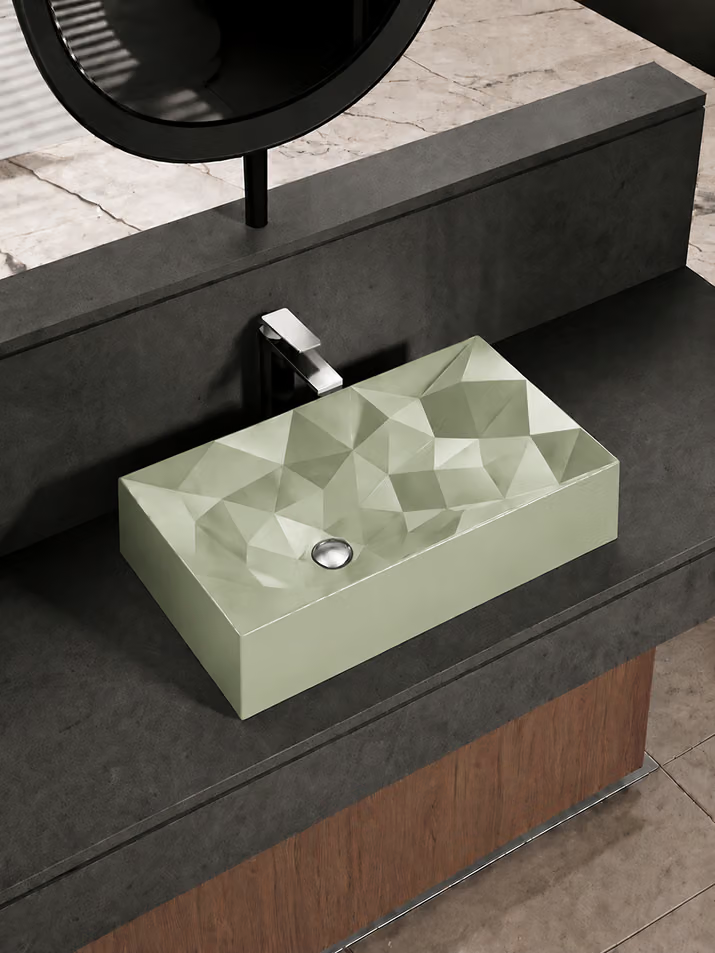
Pale green Sternhagen Kristall faceted countertop basin in Sani-Quartz on a dark stone vanity.
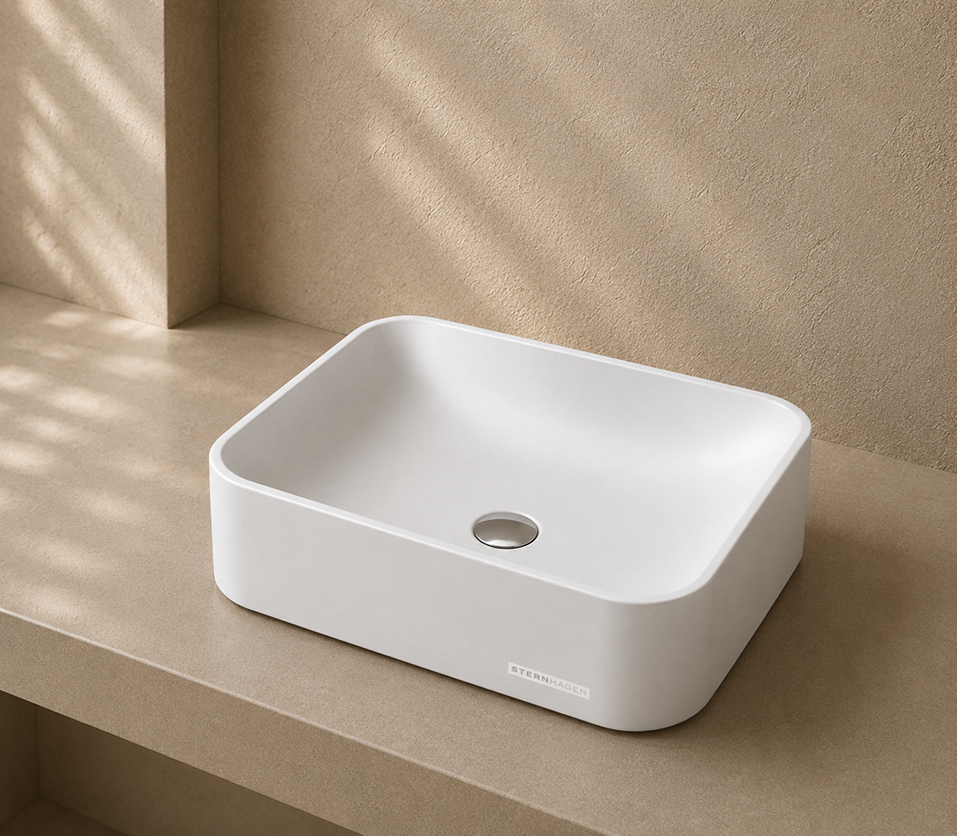
White Sternhagen Seerose rectangular countertop basin.
Frequently Asked Questions
1. Are glass wash basins durable?
Yes, when made from good-quality tempered glass and installed correctly, though they remain more vulnerable to impacts and scratches than some materials.
2. Do glass wash basins break easily?
Not in normal use. Tempered glass handles everyday use but can still break from heavy impacts, over-tightened fittings or sudden extreme temperature changes.
3. Are glass basins difficult to clean?
Not difficult, but water spots and soap residue show easily, so they need regular, gentle wiping and drying.
4. Is a glass wash basin better than a ceramic basin?
Glass offers more visual impact; glazed ceramic usually hides marks better and is easier to maintain. The right choice depends on your priorities and the product’s quality.
5. Do glass wash basins scratch easily?
They can scratch with abrasive cleaning or contact with hard objects, so use soft cloths and gentle cleaners.
6. Are glass wash basins suitable for everyday use?
Yes, when properly designed and installed, though they suit powder rooms and lighter-use bathrooms better than busy family bathrooms.