By Sternhagen Editorial Team
A health faucet is a handheld water spray fitted beside the toilet and used for personal cleaning after using the WC. You press a trigger or button to release a controlled jet of water, then return the spray to its wall holder. This guide explains how it works, how to use it properly and what to check before you buy one.
What Is a Health Faucet?
A health faucet is a compact, hand-operated water spray mounted within easy reach of the toilet. It offers a water-based alternative or addition to toilet paper.
It is also called a bidet spray, handheld bidet, toilet jet spray or shattaf. Whatever the name, the set-up is the same: a spray head, a flexible hose and a water supply connection.
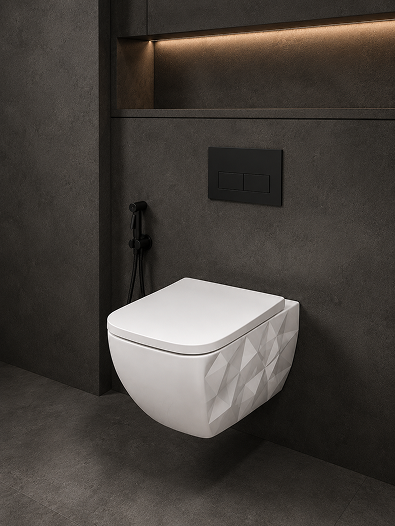
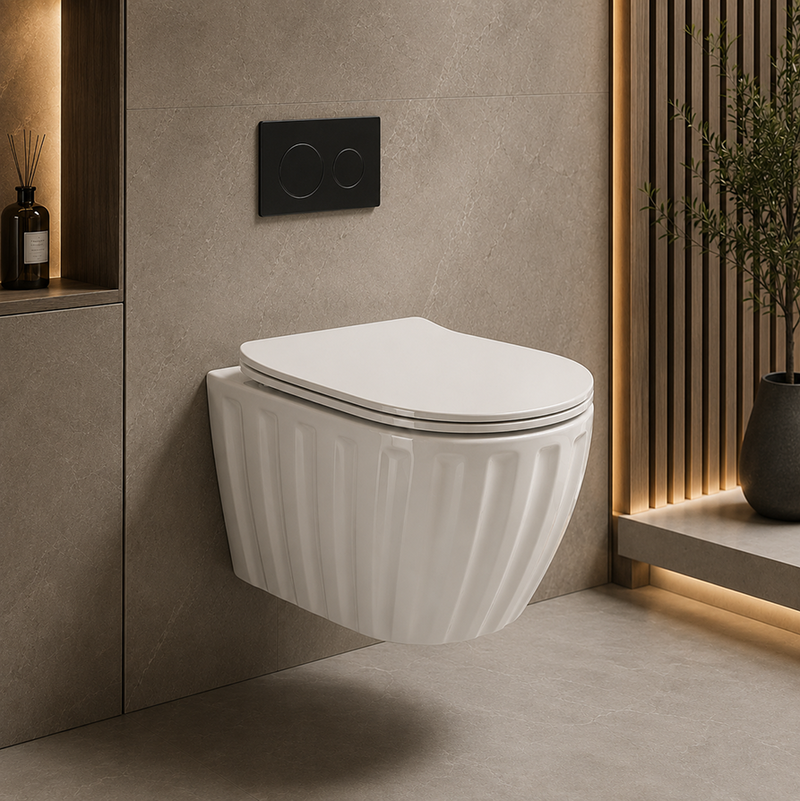
A wall-hung WC with a matte black health faucet mounted on the wall beside it – a typical, tidy installation.
How Does a Health Faucet Work?
Water flows from the plumbing connection through the flexible hose to the spray head. Pressing the trigger opens a valve and water comes out of the nozzle; releasing it stops the spray. Spray strength depends on the product and your water pressure – homes fed by an overhead tank usually have gentler pressure than those with a pump.
The main components are:
- Spray head: directs water for cleaning.
- Flexible hose: connects the spray head to the water supply.
- Wall holder: keeps the spray head in place when not in use.
- Shut-off valve: usually an angle valve that controls the water supply to the spray.
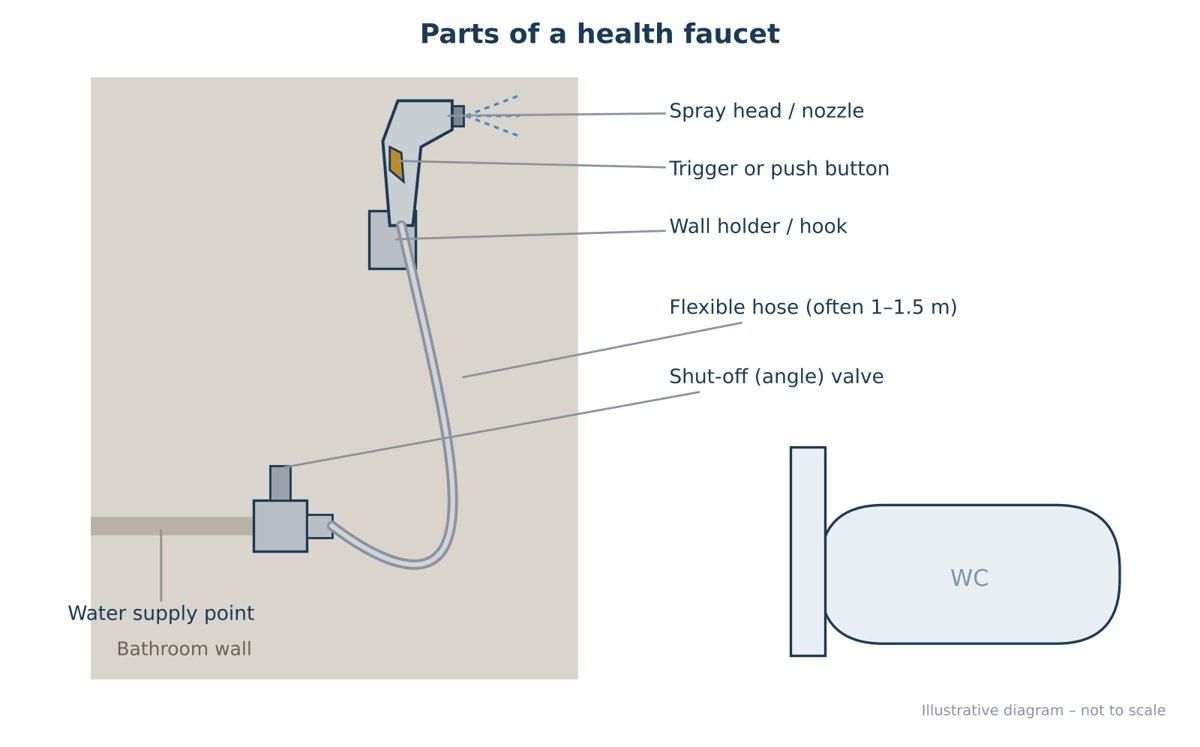
Labelled diagram showing the parts of a health faucet: spray head, trigger, wall holder, flexible hose, shut-off angle valve and water supply point.
How to Use a Health Faucet Properly
- Sit comfortably on the toilet and take the spray head from its holder.
- Position the nozzle towards the area that needs cleaning, aiming before you press.
- Press the trigger gently, starting with low pressure.
- Adjust the angle and pressure as needed, keeping the nozzle from touching your body.
- Release the trigger when finished.
- Pat dry with toilet paper or a clean personal towel if needed.
- Return the spray head to its holder and close the supply valve if the manufacturer recommends it.
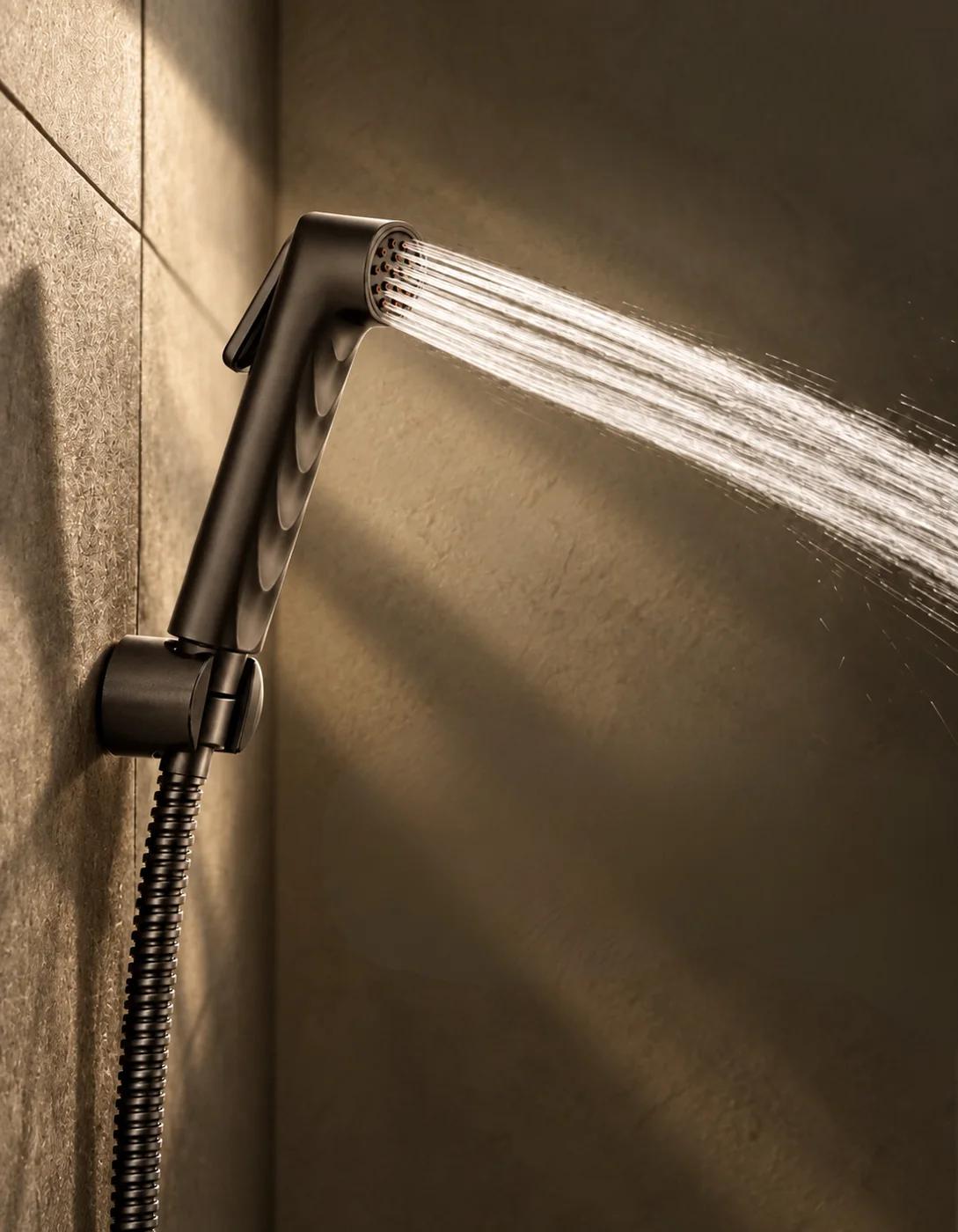
A matte black handheld health faucet releasing a gentle spray of water.
Hygiene tip: Wipe the nozzle regularly and never let the spray head rest in or hang into the toilet bowl. Start at low pressure to avoid splashing, and always wash your hands with soap after use.
Benefits of Using a Health Faucet
1. Convenient Personal Hygiene
It provides water-based cleaning after toilet use, on its own or alongside toilet paper.
2. Easy to Use
The handheld design lets you direct the spray, and water only flows while you press the trigger.
3. May Reduce Toilet Paper Usage
Many people use less paper – often just enough to pat dry – though it rarely removes the need for paper entirely.
4. Useful for Toilet Cleaning
The spray can help rinse parts of the bowl. Avoid spraying soiled water at close range, and rinse the nozzle afterwards.
5. Suitable for Many Bathroom Layouts
It needs little wall space and can be installed beside most toilets where plumbing allows.
Different Types of Health Faucets
These are feature variations rather than separate plumbing systems.
Trigger-Operated Health Faucets
The most common design: squeezing a trigger or lever releases the water.
Push-Button Health Faucets
A button controls the flow, with spray heads available in different shapes.
Health Faucets with Adjustable Spray
Some models offer flow control or more than one spray pattern. Availability depends on the specific product.
Health Faucet vs Bidet: What’s the Difference?
A health faucet is itself a handheld bidet spray. The comparison below is with standalone or toilet-integrated bidet systems.
| Feature | Health Faucet | Bidet |
|---|---|---|
| Design | Handheld spray | Separate fixture or toilet-integrated system |
| Operation | Manually directed | Fixed or adjustable water outlet |
| Installation | Usually installed beside the toilet | Depends on the bidet type |
| Space | Generally compact | Varies by design |
| Water control | Handheld trigger or button | Controls depend on the model |
| Best for | Simple, flexible water cleaning | Hands-free or integrated cleaning options, depending on design |
For integrated options, read Bidet Toilets Explained: What They Are, Types & How to Use One.
Things to Consider Before Buying a Health Faucet
Material and Build Quality
Brass bodies are sturdy, good-quality ABS doesn’t corrode, and a stainless steel hose resists kinking and wear. Choose materials made for constant moisture and daily use.
Water Pressure Compatibility
Check the product’s recommended pressure range. Tank-fed water gains roughly 0.1 bar per metre of height, while pump-boosted supplies can be much stronger. Excessive pressure makes spraying uncomfortable and stresses the hose and seals; a plumber can fit a pressure-reducing valve if needed.
Hose Length and Flexibility
The hose should reach the toilet comfortably without stretching; 1–1.5 m is common. Avoid hoses long enough to touch the floor.
Spray Control
Choose a trigger or button that is comfortable and needs only light pressure.
Finish and Bathroom Design
Match the finish to your flush plate, basin mixer and accessories – chrome, matte black, brushed gold or gunmetal.
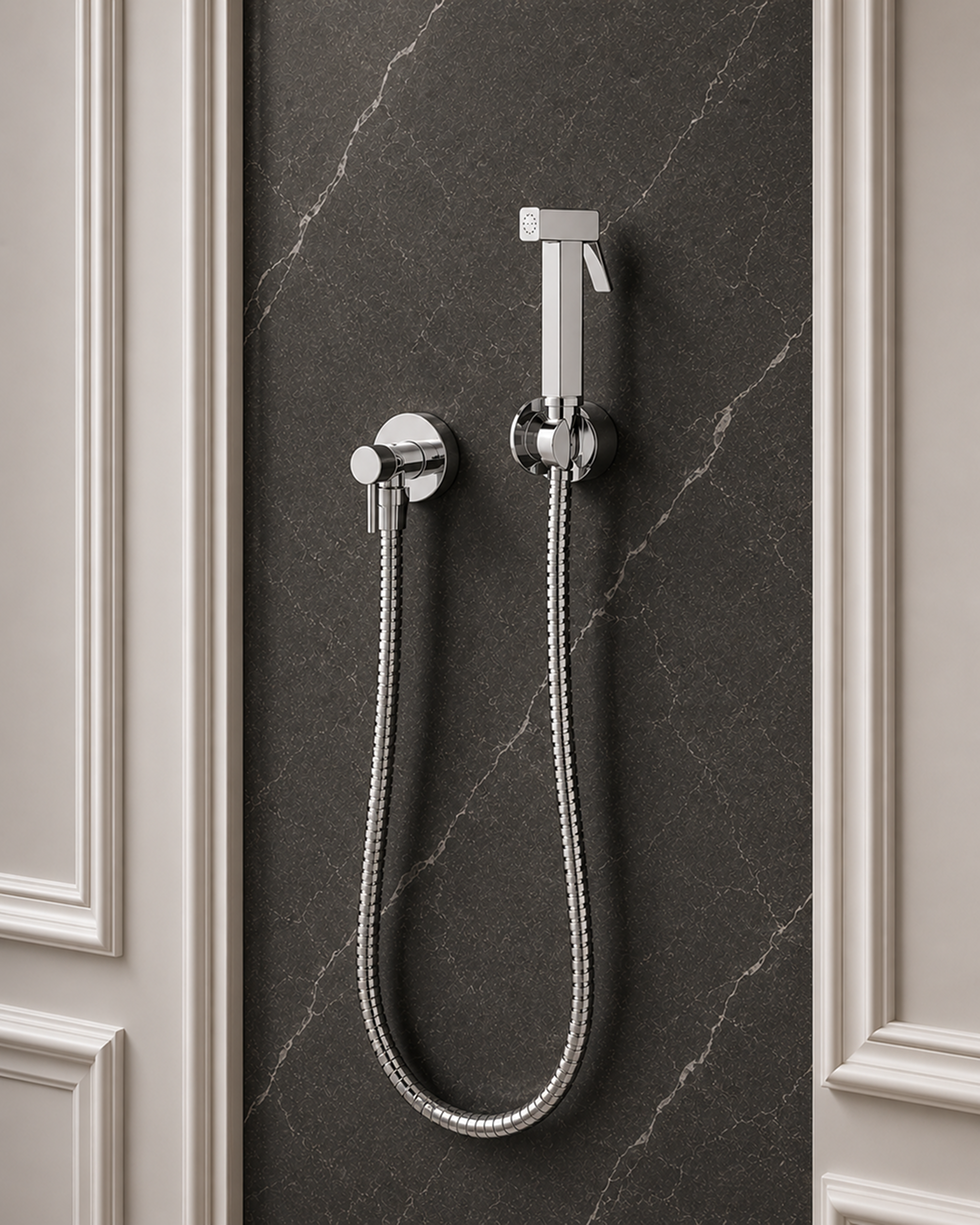
Sternhagen FK chrome health faucet with stainless steel hose and wall holder on a marble wall.
Warranty and Maintenance
Check the warranty, the installation instructions and whether replacement hoses and holders are available.
Health Faucet Installation and Maintenance Tips
Installation
- Fix the holder within comfortable reach of the toilet.
- Confirm the water supply and connection suit the product (½-inch is common in Indian homes).
- Use a dedicated angle valve to shut off the supply, and follow local plumbing rules on backflow prevention, as the nozzle can reach into the bowl.
- Use a professional plumber to avoid leaks and incorrect connections.
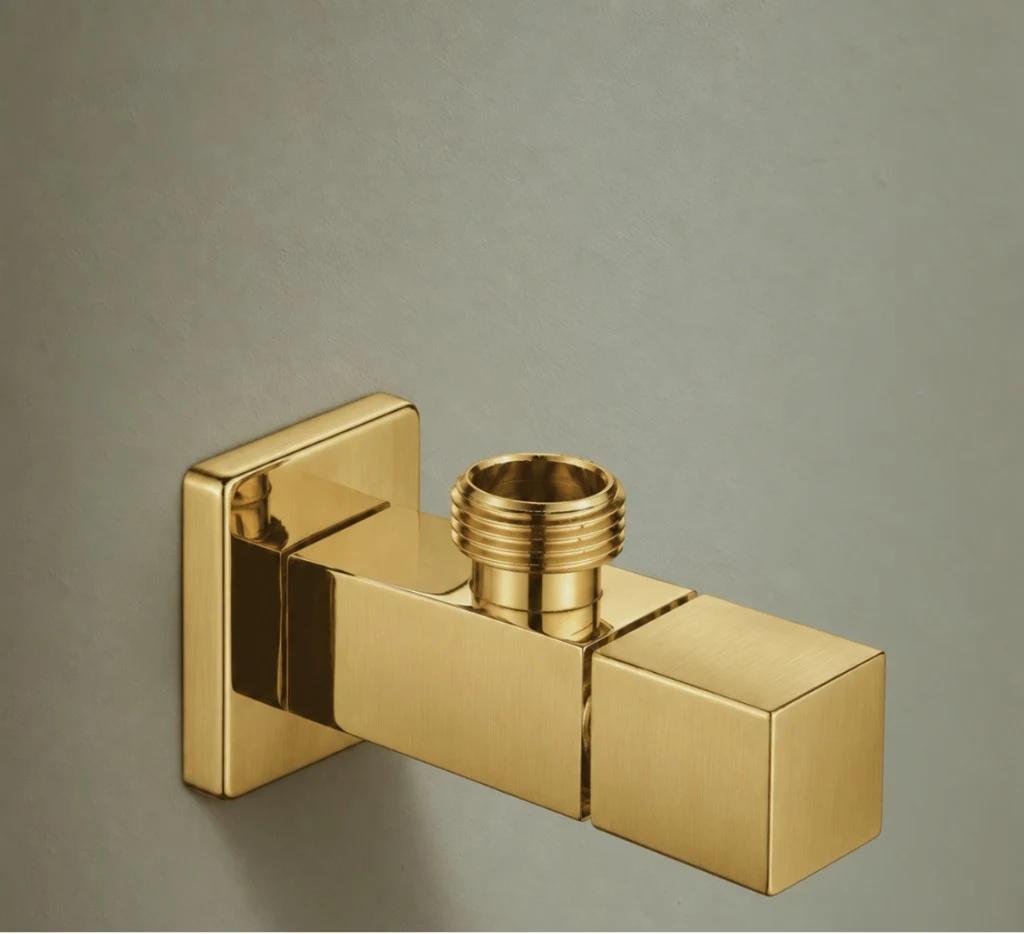
Brushed gold brass angle valve used to shut off the water supply to a health faucet.
Maintenance
- Clean the spray head and nozzle regularly with mild soap and water.
- Check the hose and connections for leaks, kinks or worn seals.
- Avoid harsh chemicals and abrasives that can damage the finish.
- Follow the manufacturer’s advice on closing the water supply after use.
Explore Bathroom Fittings by Sternhagen
Sternhagen’s bathroom accessories include the FK Health Faucet (chrome) and FK Health Faucet in gold, with a brass body and stainless steel hose, and the Health Faucet (ABS) in Chrome Plated, Black Matt, Brushed Gold and Gun Grey, with a matching brass angle valve.
Pair it with one of Sternhagen’s wall-hung water closets, such as the Kristall wall-hung WC, see our complete bathroom accessories list and guide to the types of water closets, or find a Sternhagen store.
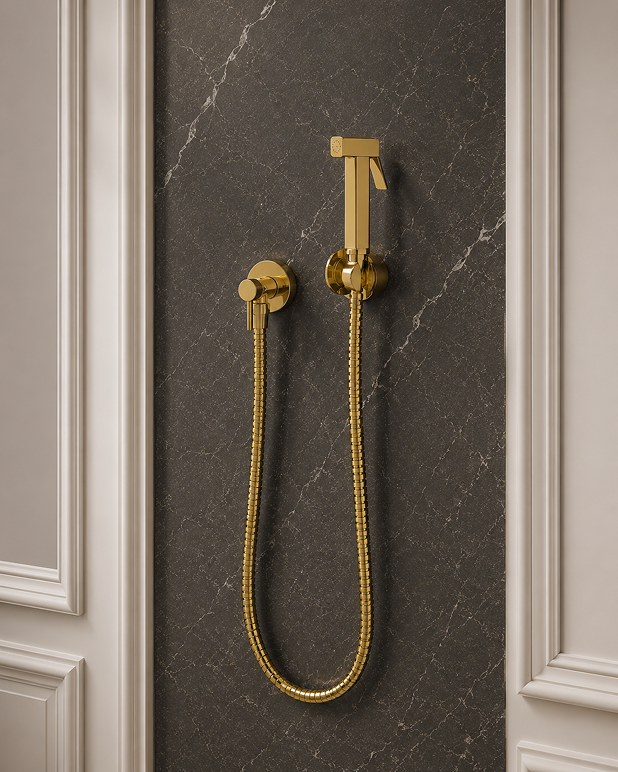
Sternhagen FK health faucet in gold finish with hose and holder on a white panelled wall.
Frequently Asked Questions
1. What is a health faucet used for?
It is used for personal cleaning with water after using the toilet, and can also help rinse the toilet bowl.
2. Is a health faucet the same as a bidet?
A health faucet is a handheld form of bidet spray. Other bidets are separate fixtures or are built into the toilet or seat.
3. Can a health faucet be installed in any bathroom?
Usually, provided there is a suitable water supply, compatible plumbing and space beside the toilet. Without a nearby water point, a plumber will need to add one.
4. Is a health faucet better than toilet paper?
It is an alternative or addition to toilet paper. Many people use water to clean and paper to dry; the choice depends on personal preference.
5. How do you clean a health faucet?
Wipe the spray head, nozzle, hose and holder with mild soap and water, then dry. Avoid abrasive or harsh cleaners.
6. Why is my health faucet leaking?
Common causes are worn seals, loose connections or a faulty spray mechanism. Close the angle valve, check the connections and consult the product instructions or a plumber.